A stackable moss pole for climbing plants. Change the settings and the model renders again.
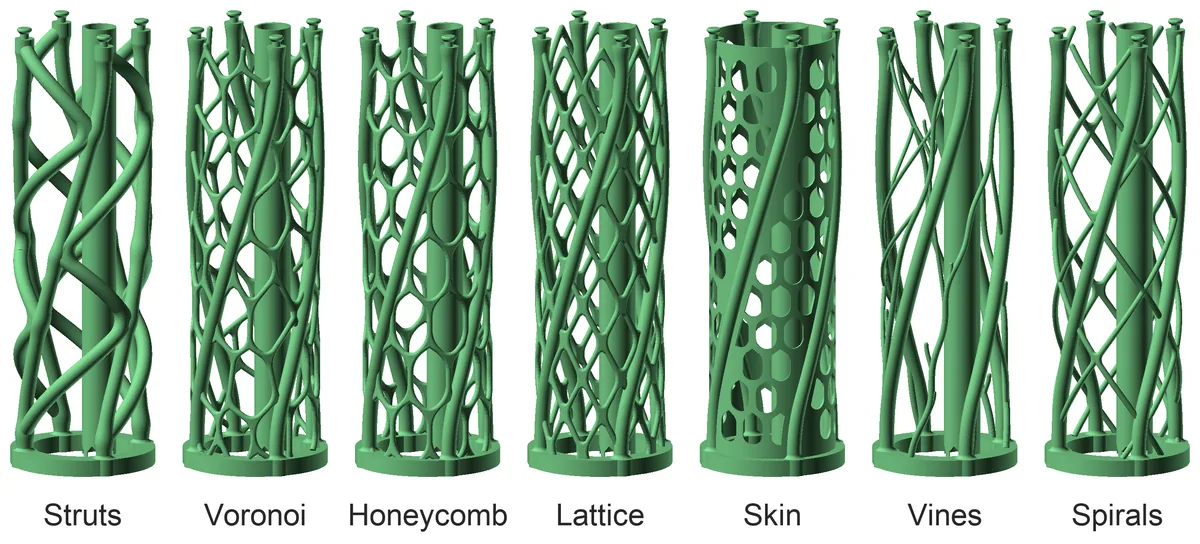
Web. The same moss pole with each web: struts, Voronoi, honeycomb, diamond lattice, perforated skin, vines and spirals. Everything else stays the same, so moss poles with any web stack.
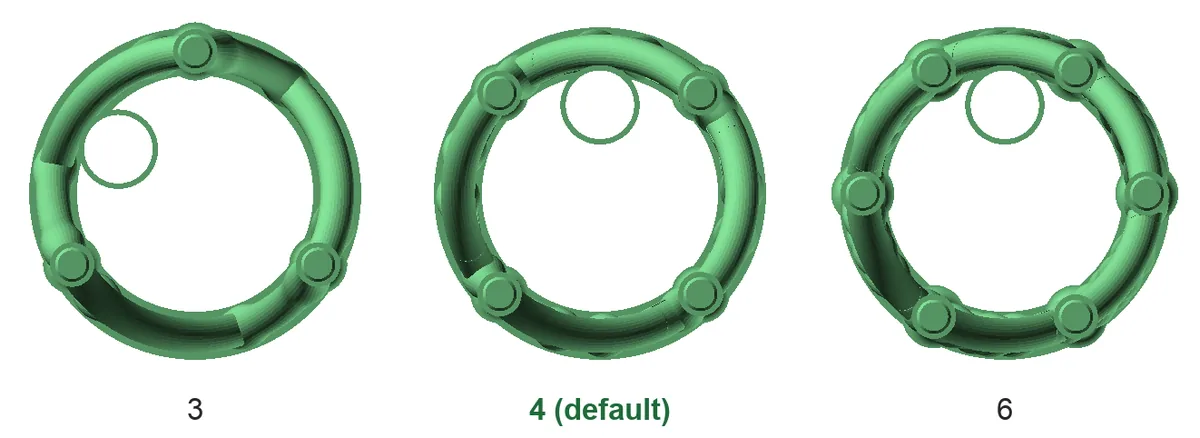
Pole count. Three, four and six poles. The poles stand on one circle, so with more of them the faces between them get narrower.
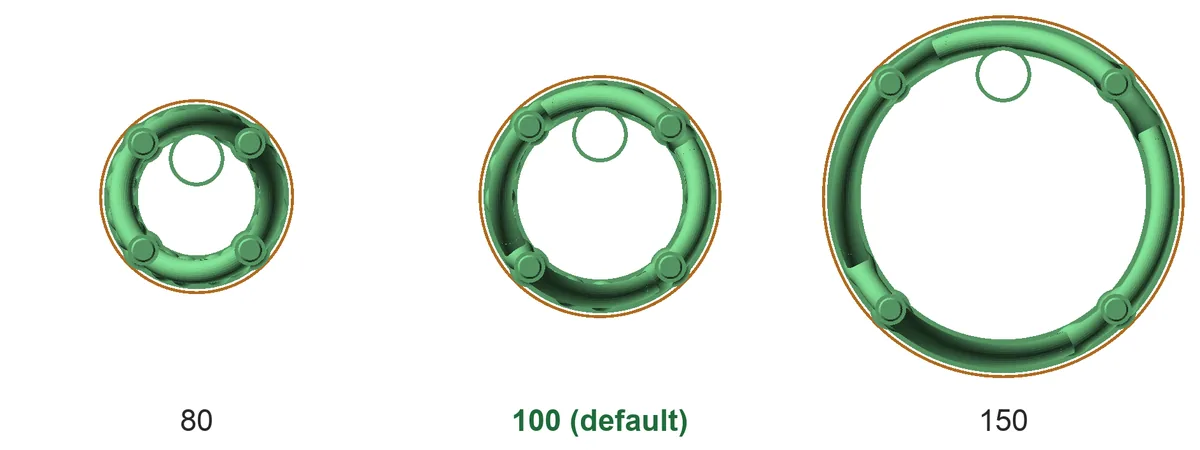
Fit. The moss pole fits inside the circle (orange) of this diameter, ring and poles included; the poles move in or out with it.
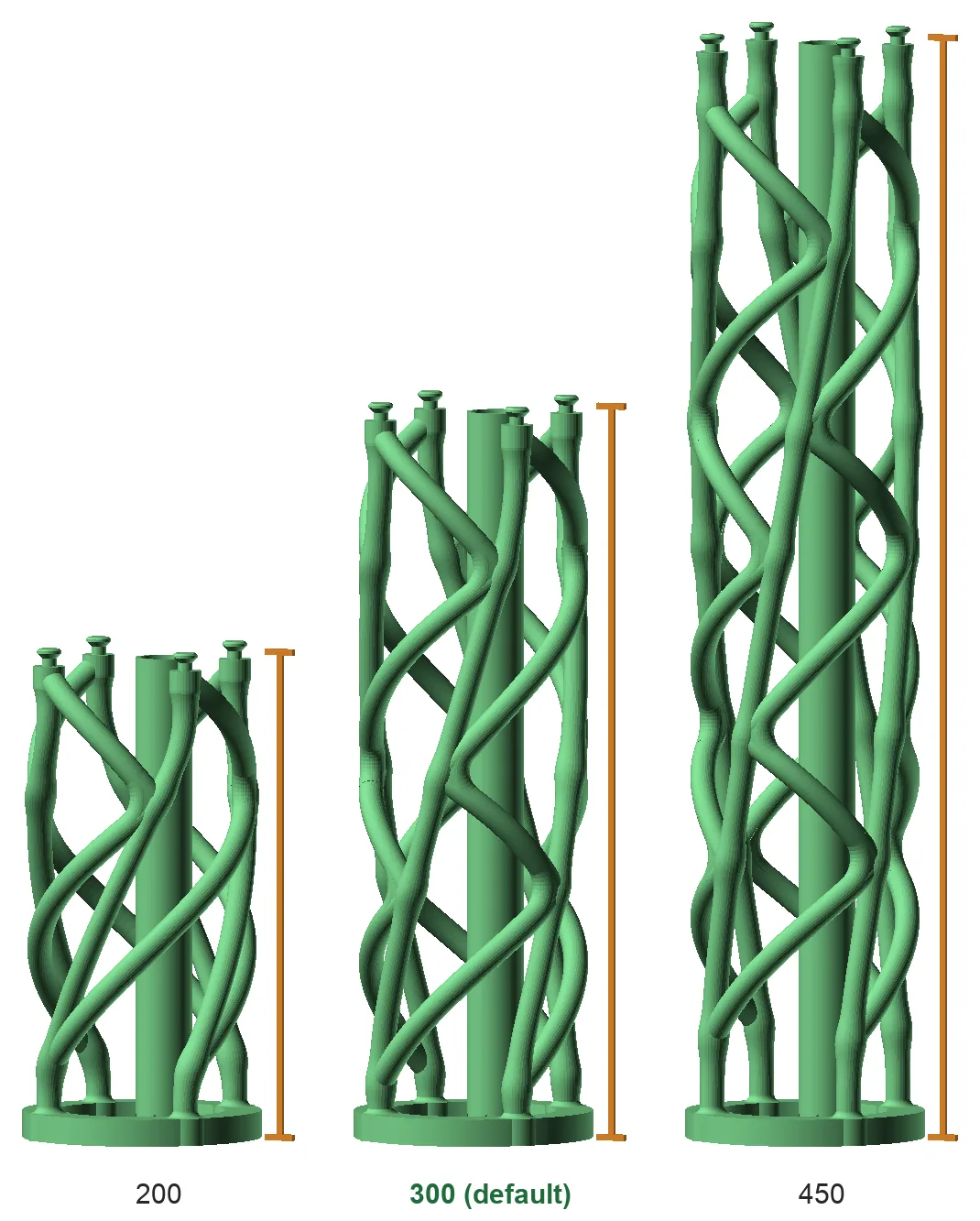
Pole height. The overall height, heads included (the orange bar). The moss pole above sits on the shoulders under the heads, so a stack grows by a little less than this per moss pole.
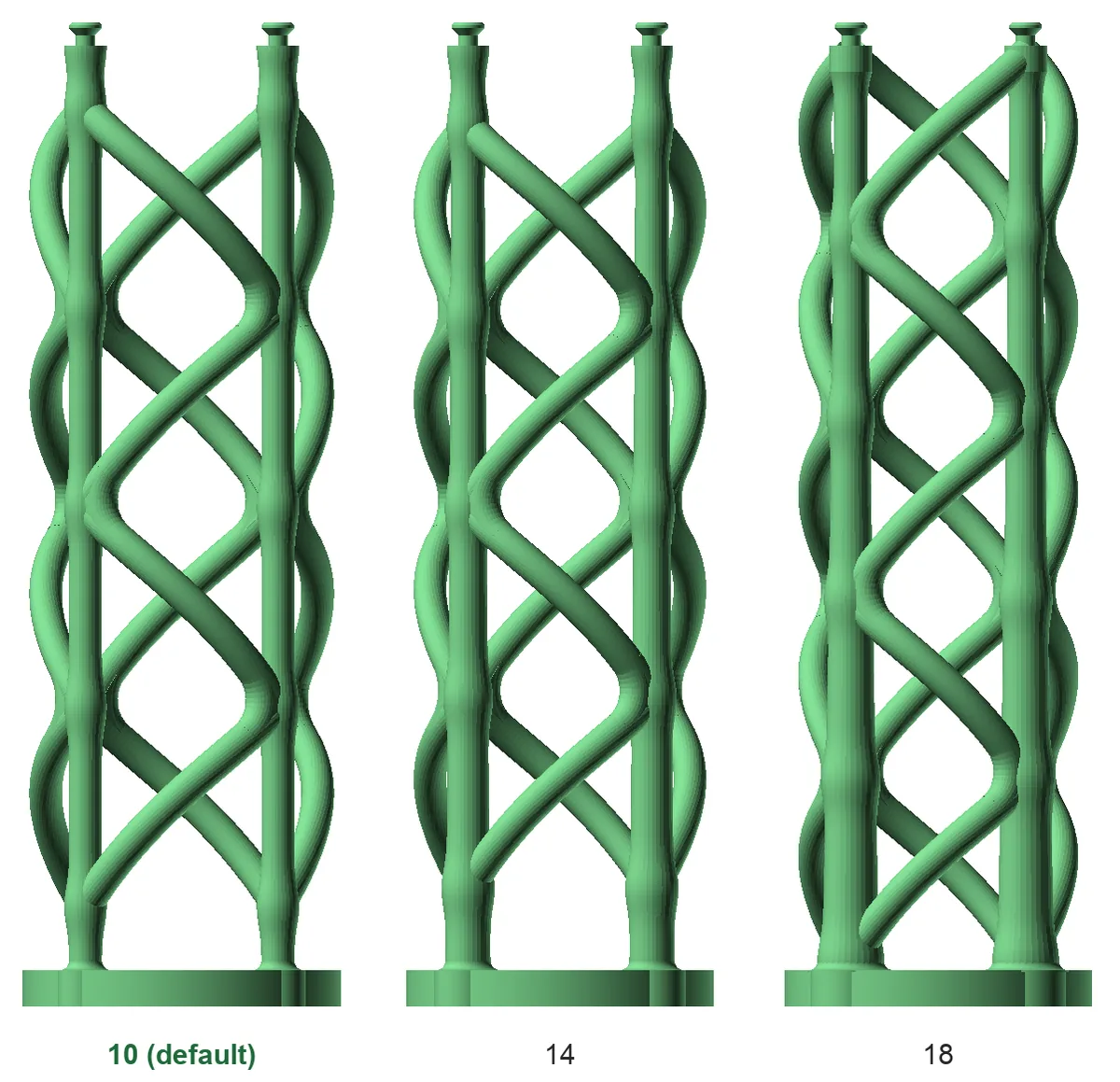
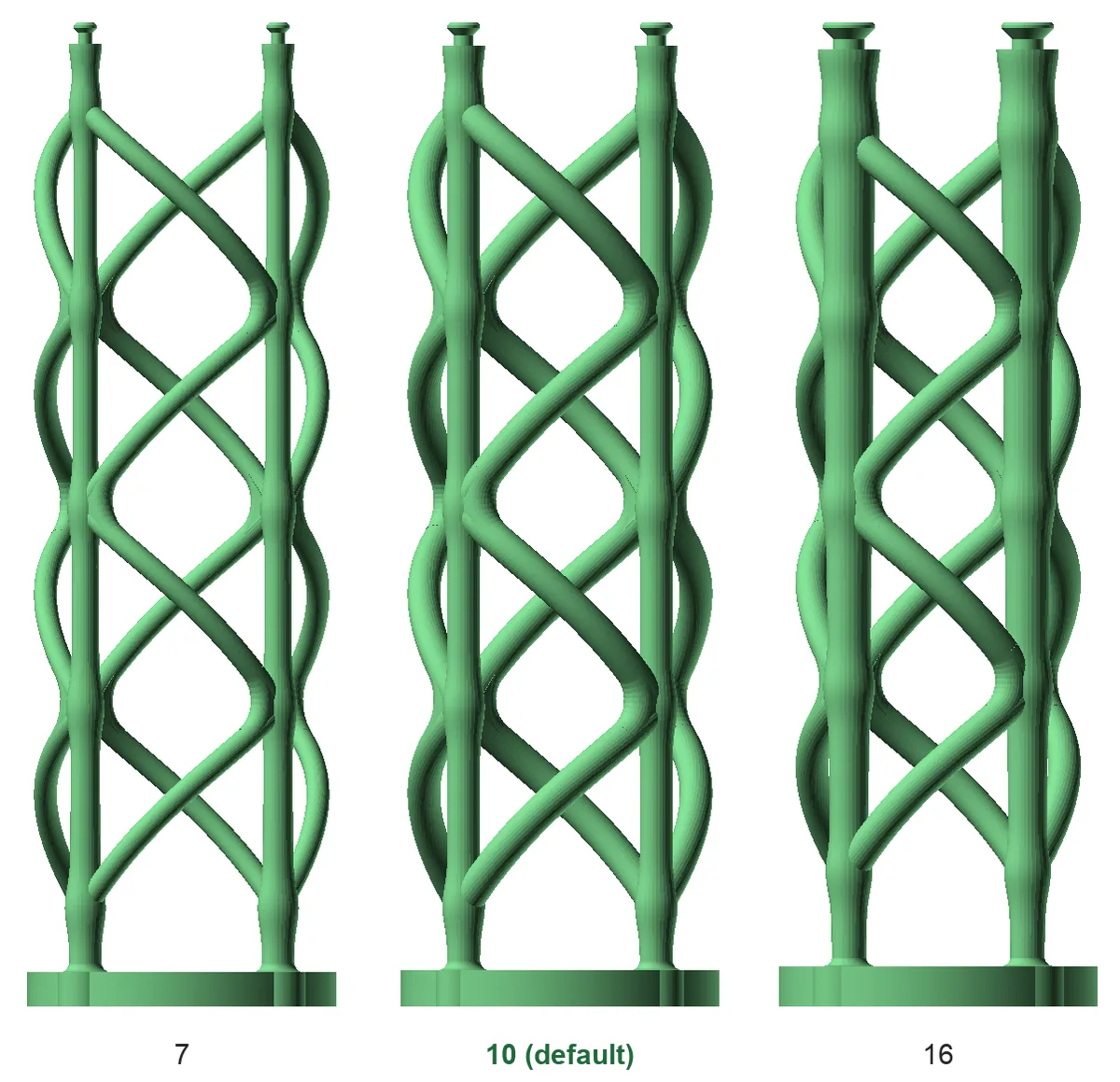
Pole base. The poles' diameter at the bottom, here with 10 mm at the top: they taper upwards, most of it low down. The struts are as thick as the thinner end.
Pole top. The poles' diameter at the top, here with 10 mm at the bottom. It also sets the heads, so the keyholes and the ring's height follow it.
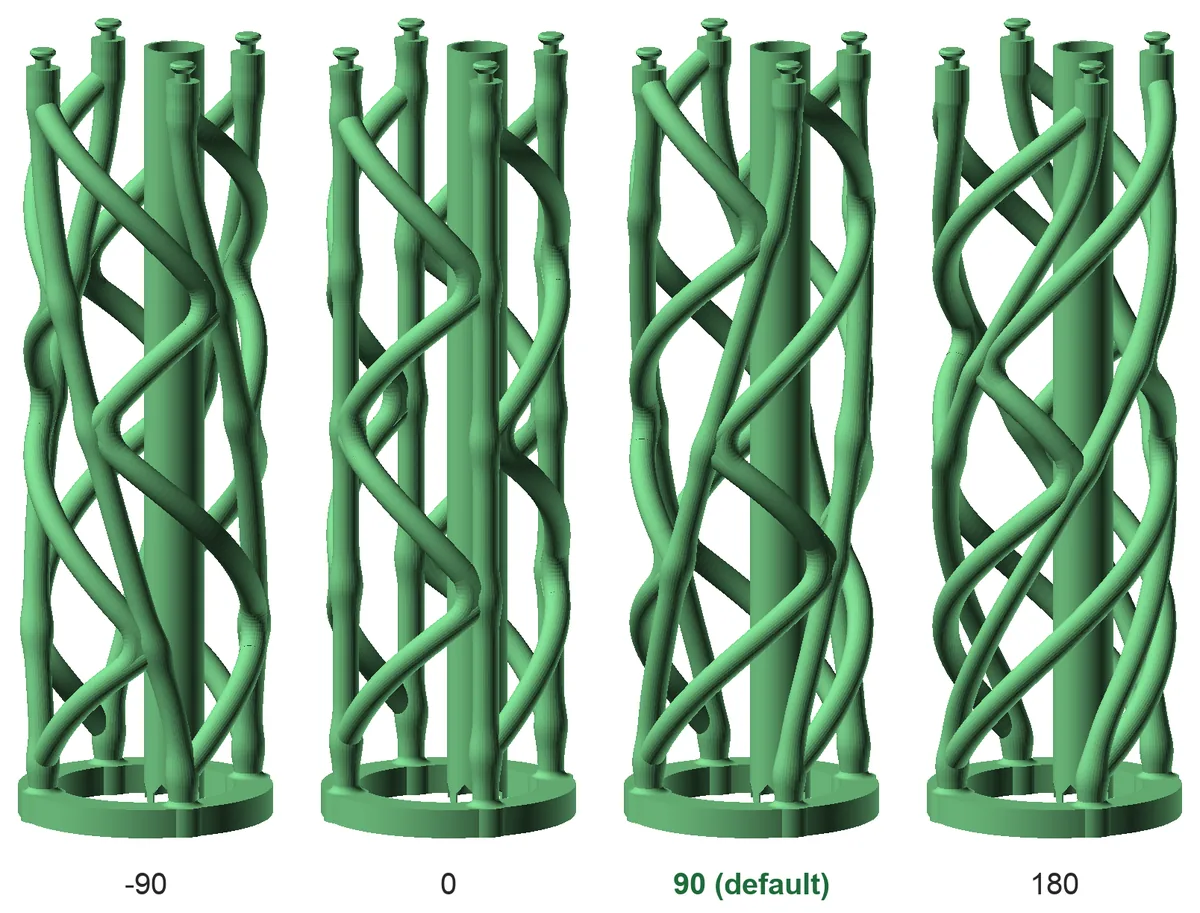
Twist. How far the poles turn round the centre from bottom to top, either way, in steps of a pole's share of a turn. The heads always come back over a pole's place.
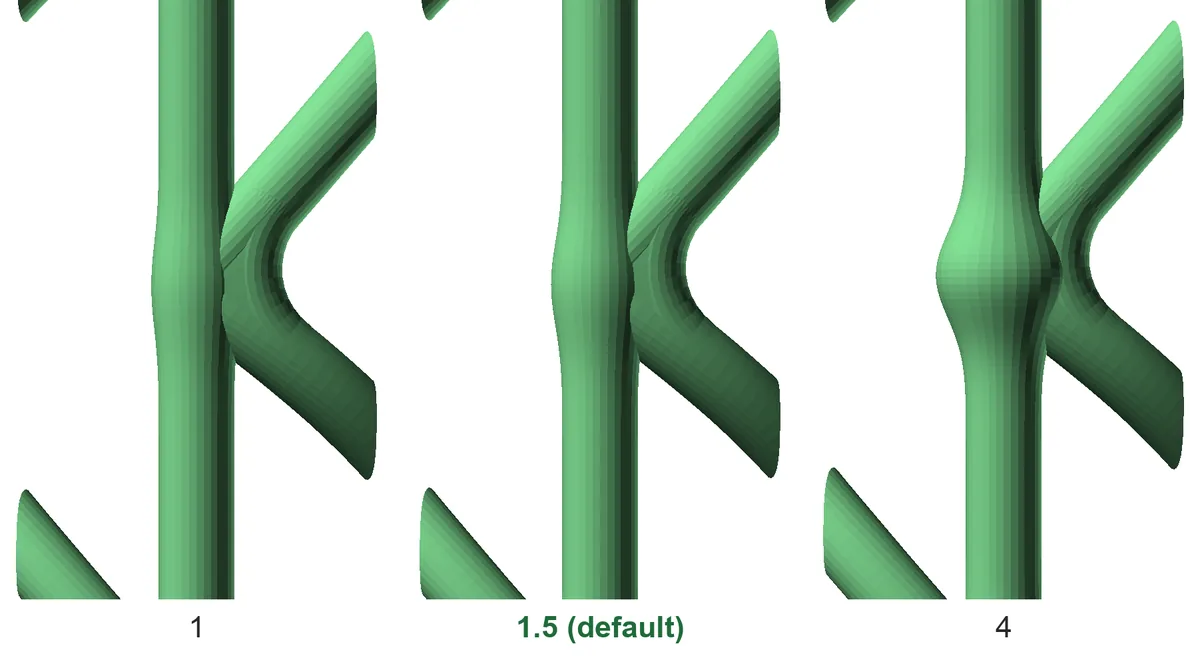
Node swell. How much thicker the poles get where struts join them, and under the heads.
Node length. How long the swellings at the strut joints are.
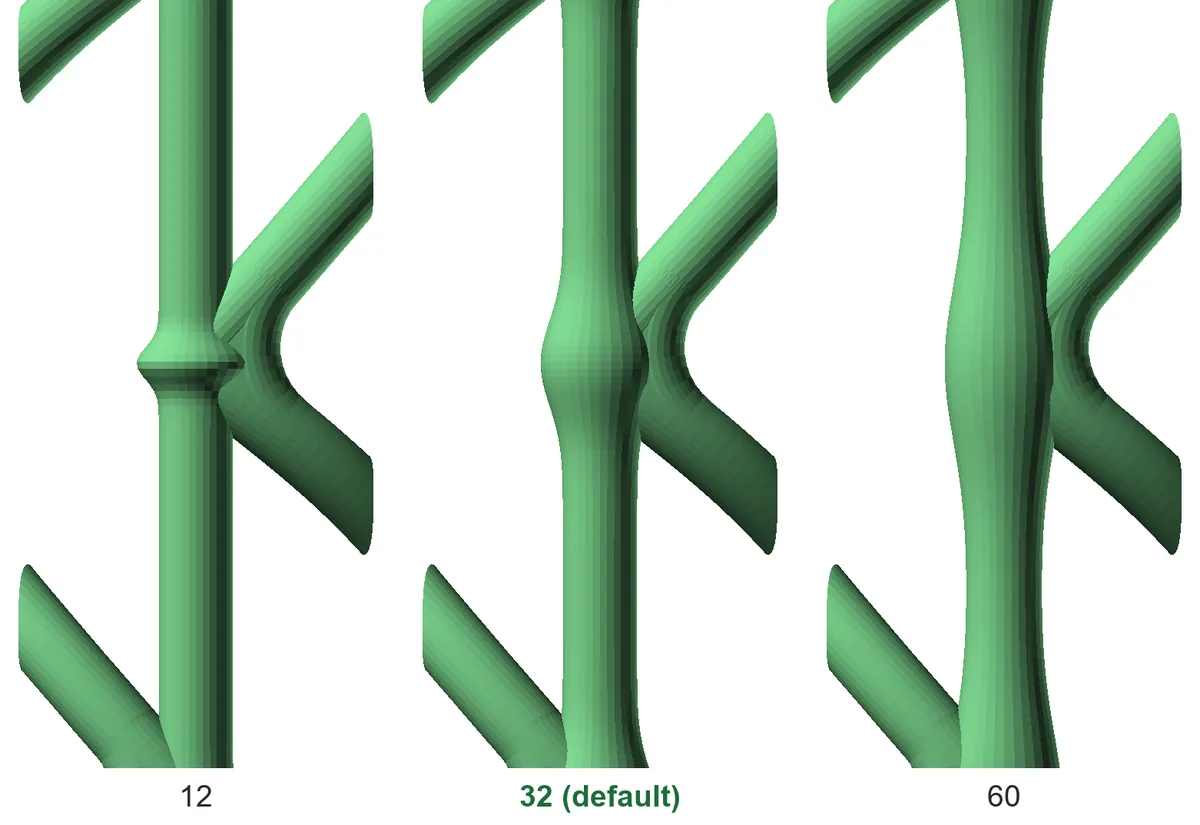
Pole flare. How far up and down the poles the web's ribs widen as they meet them, shown on the Voronoi web.
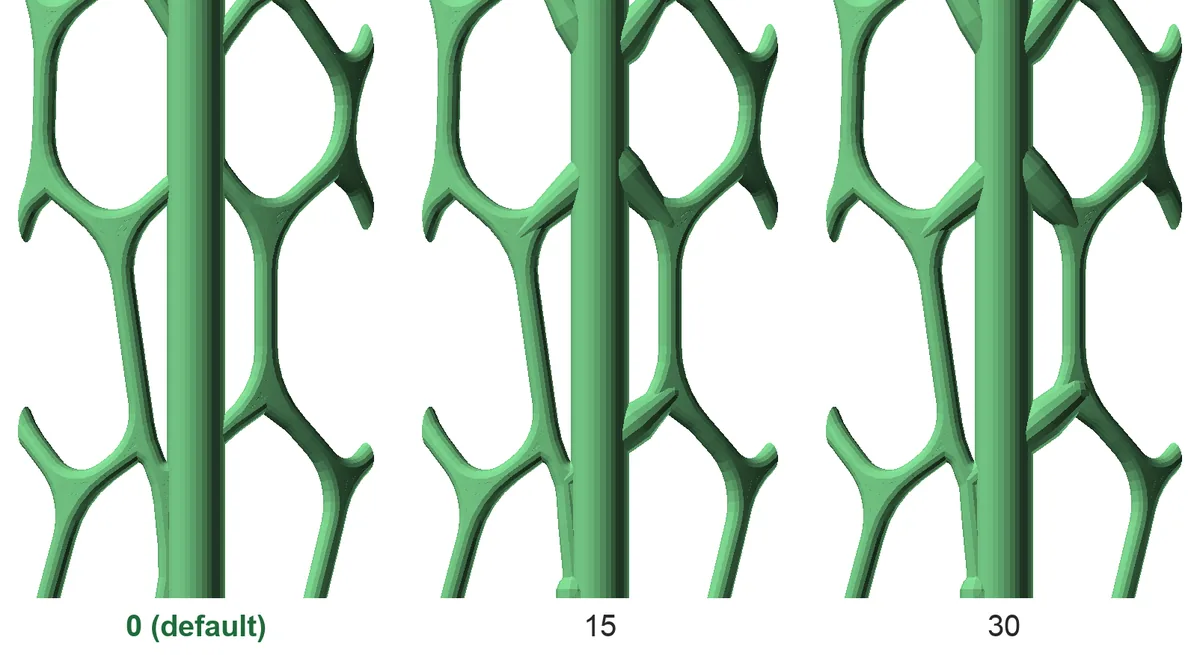
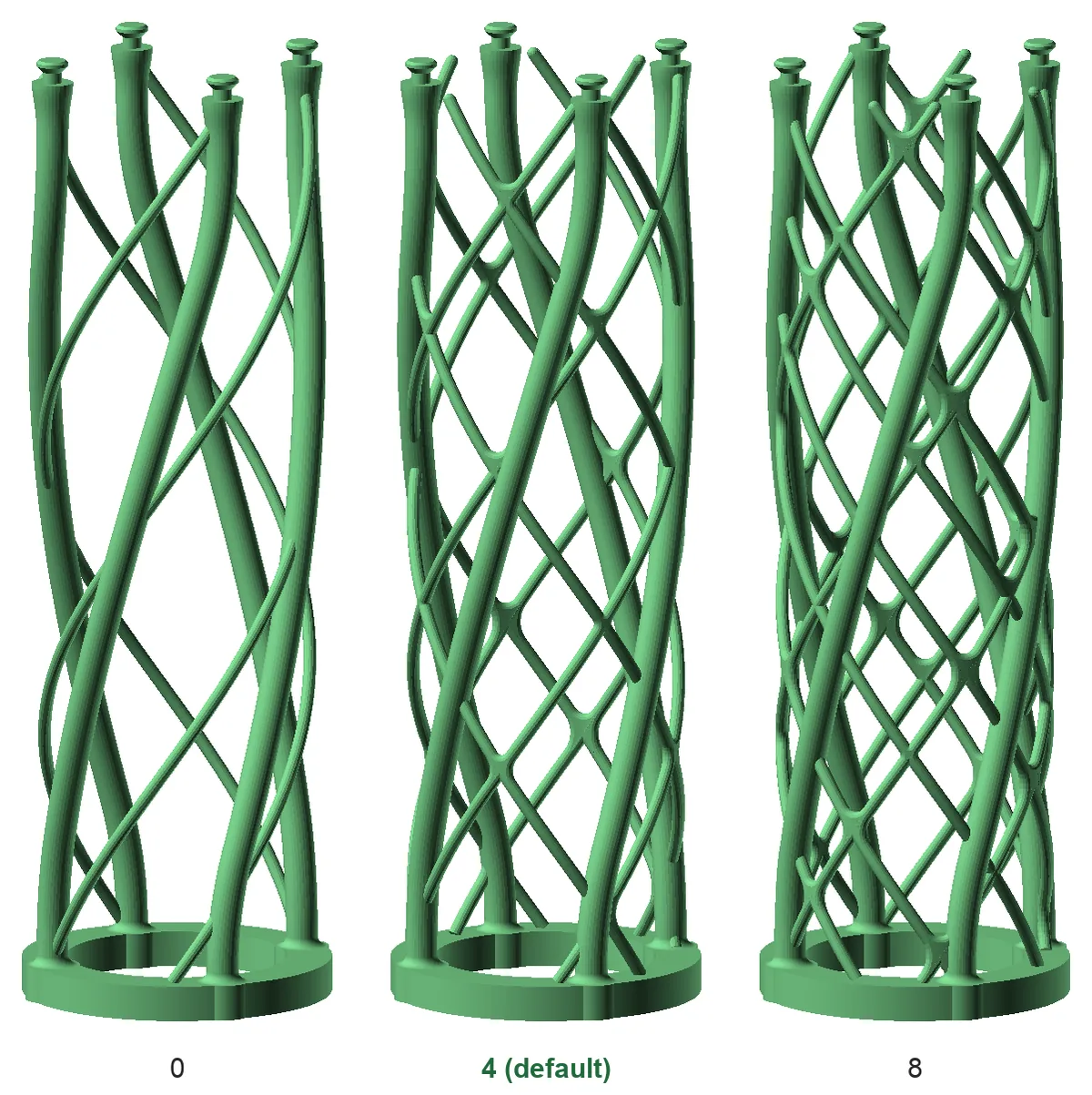
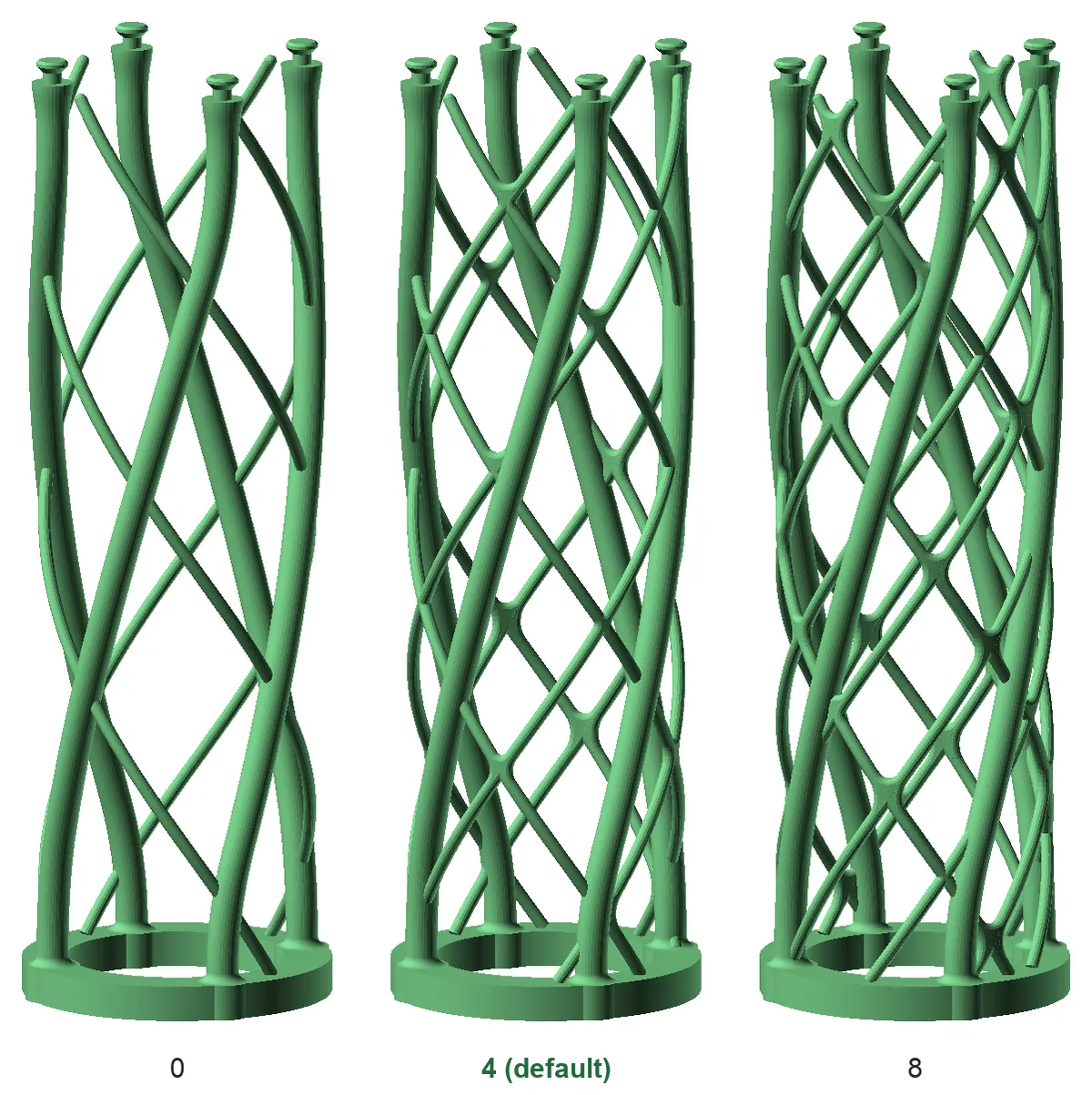
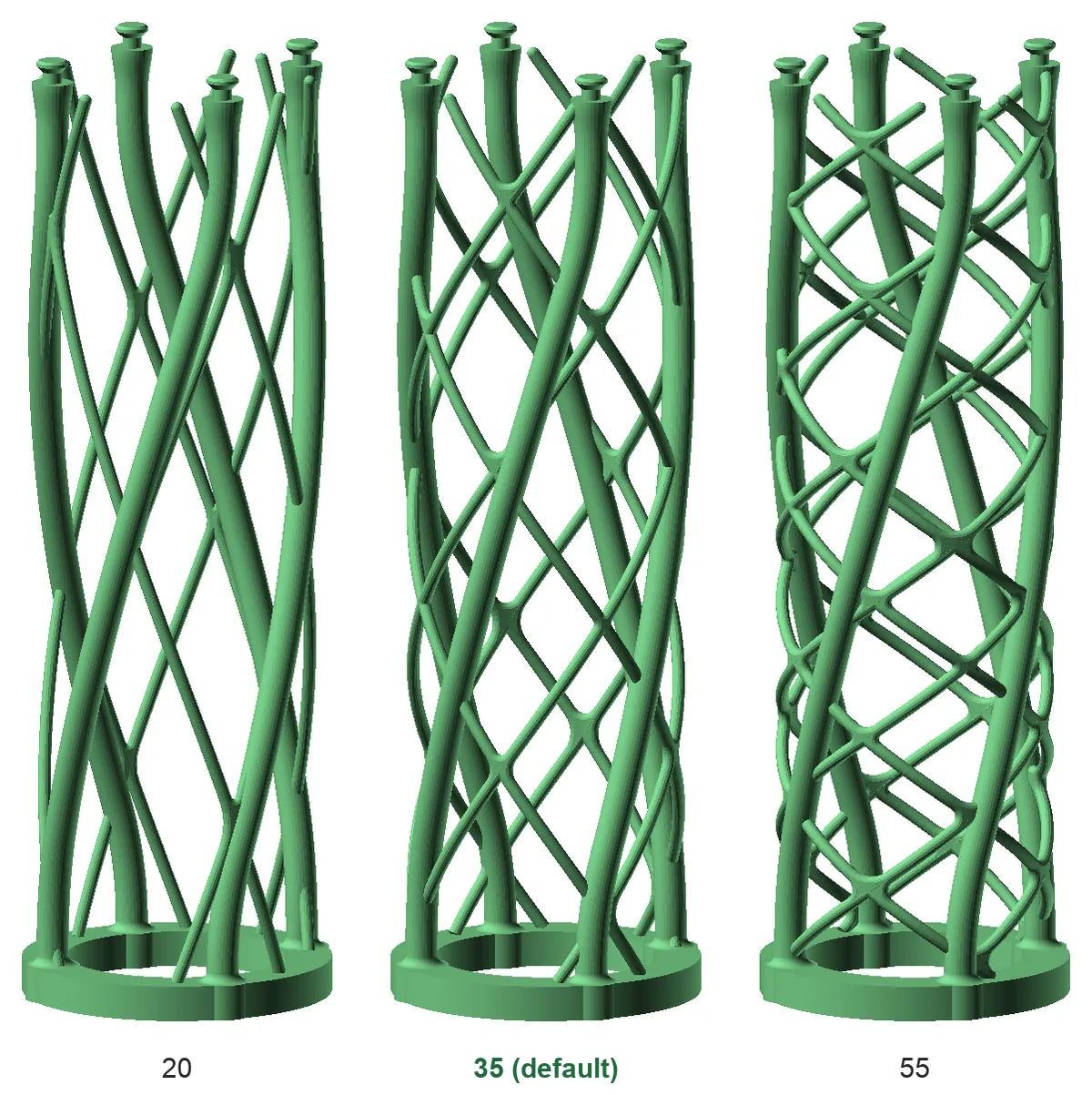
Strut angle. The struts' slope from the vertical: steeper struts sit closer together, flatter ones need more support while printing.
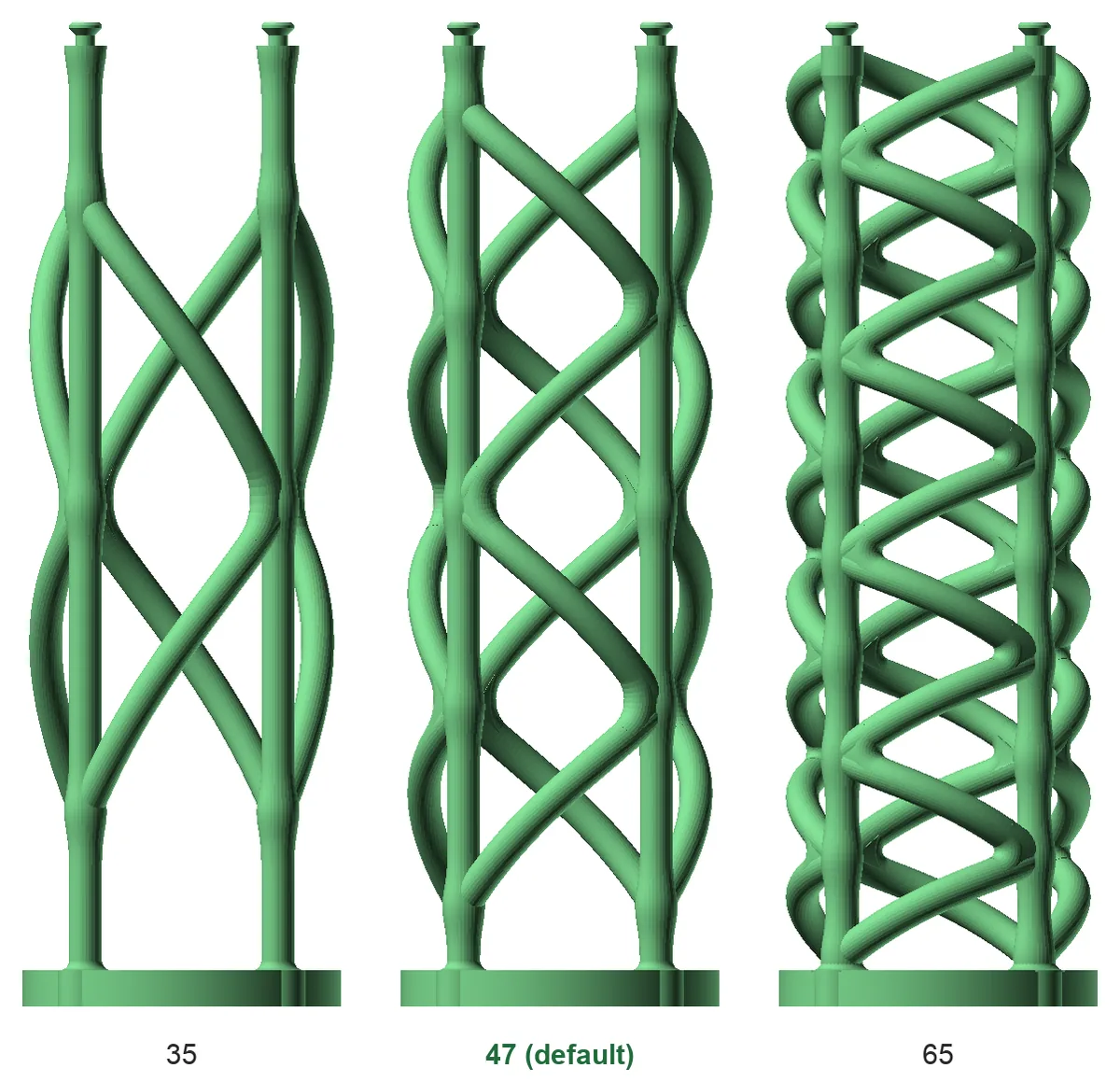
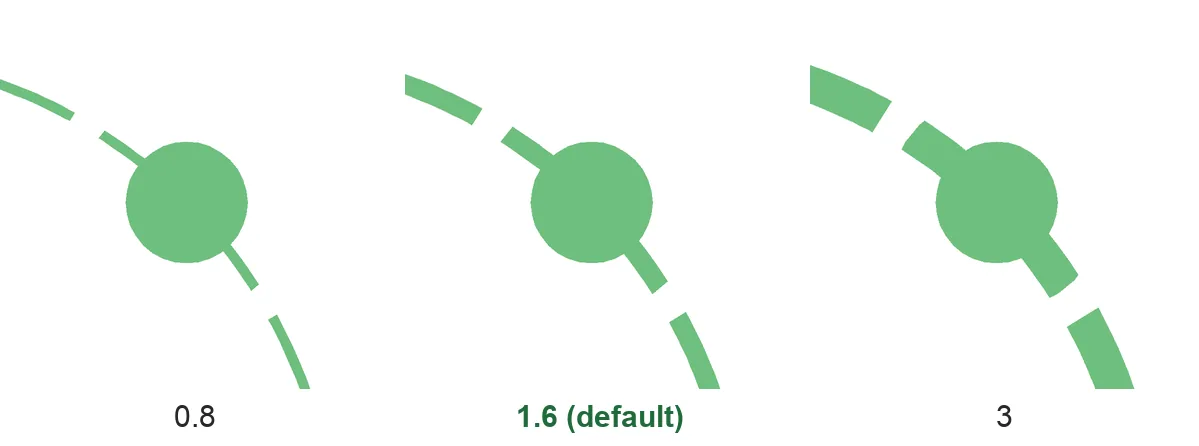
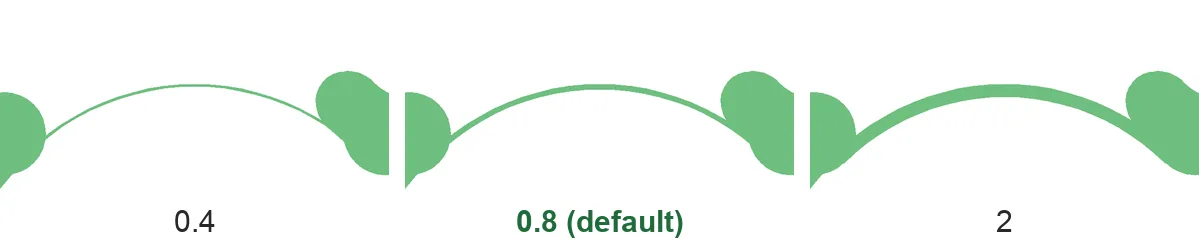
Strut bow. How far the struts bow out between their joints, in a cut across the moss pole where a strut runs halfway between two poles; the dashed line runs straight from pole to pole.
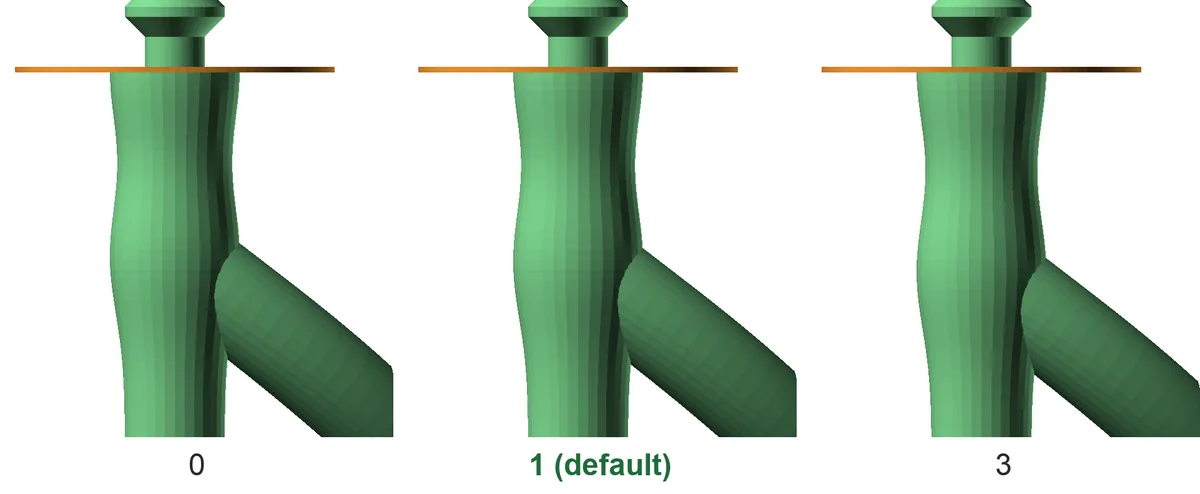
Joint fillet. Here it only keeps the topmost struts clear of the shoulders (orange), where the ring of the moss pole above sits: a larger value moves the top joints down.
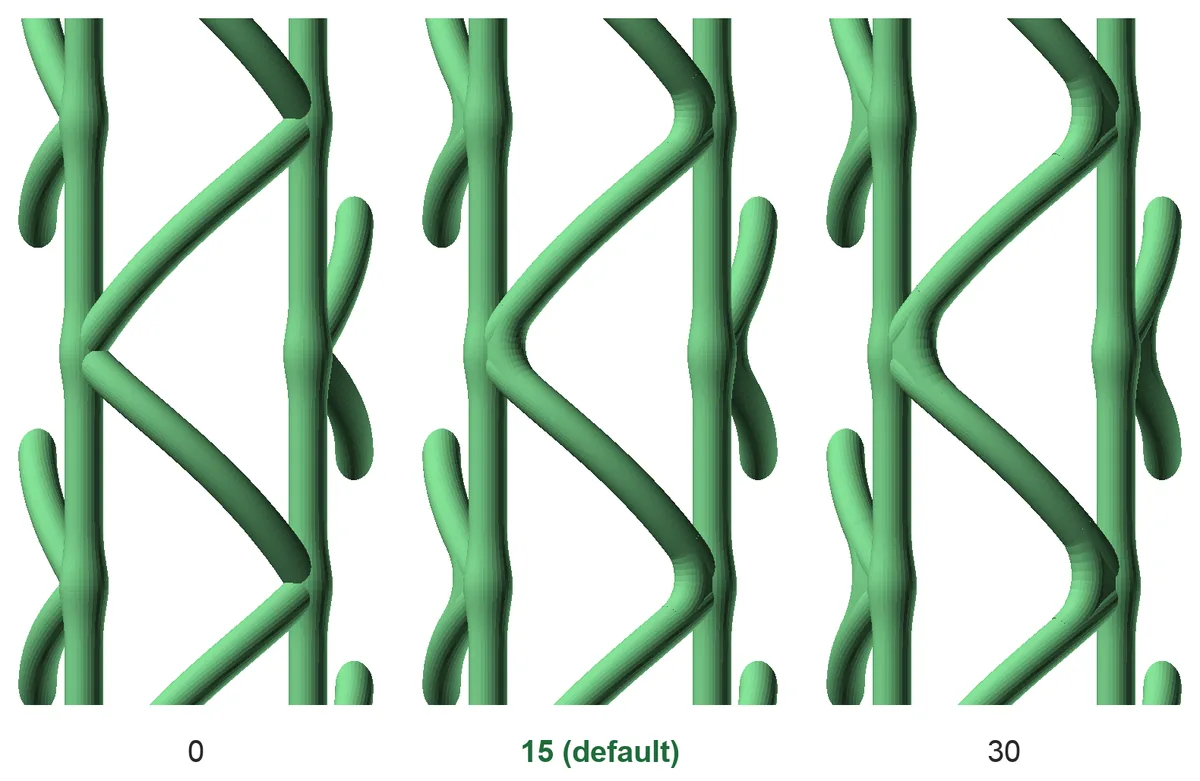
Strut fillet. The rounding in the corners where two struts meet.
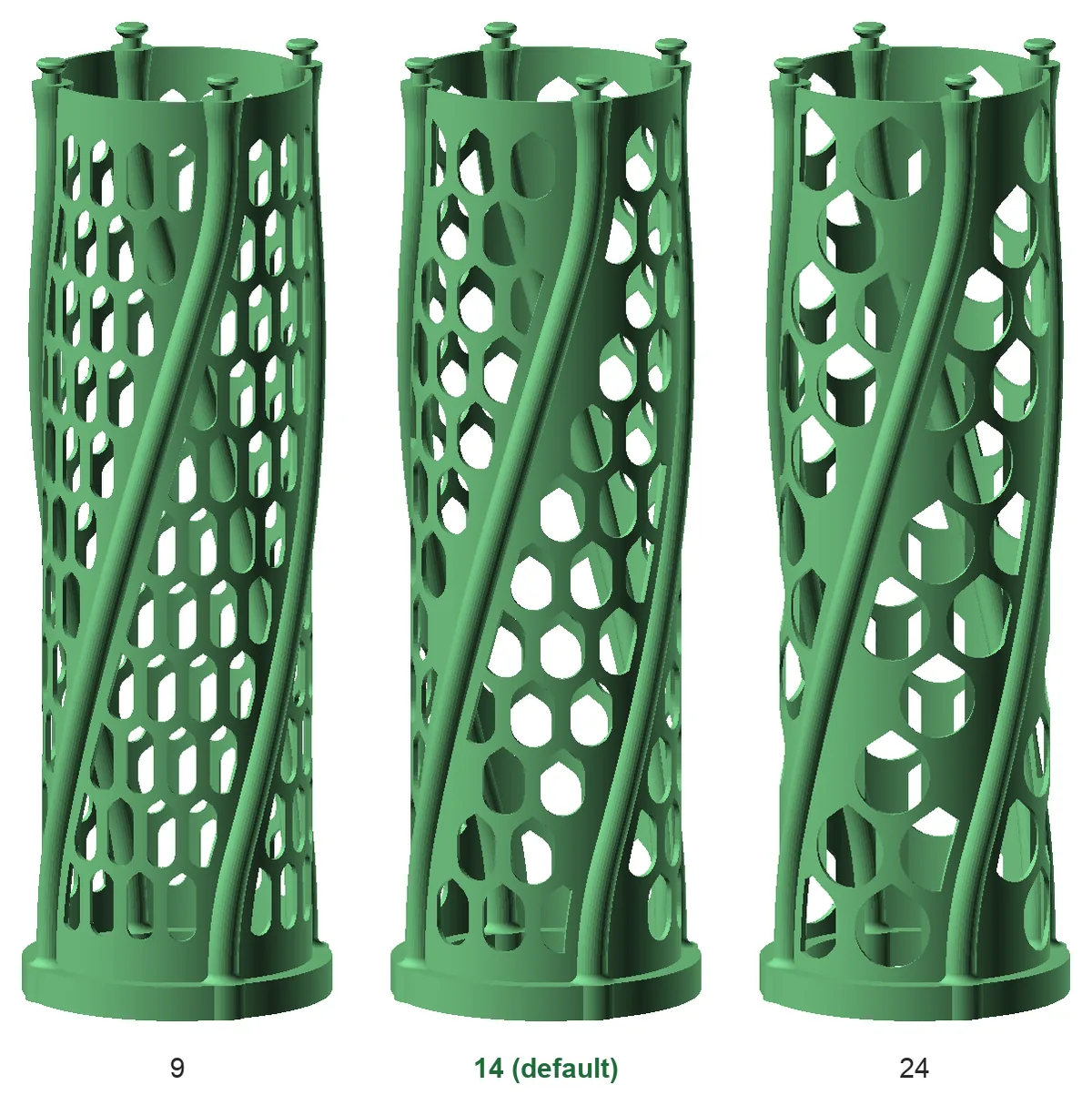
Cell width. How wide the cells are, on the pole circle; they are fitted a whole number round. Shown on the honeycomb.
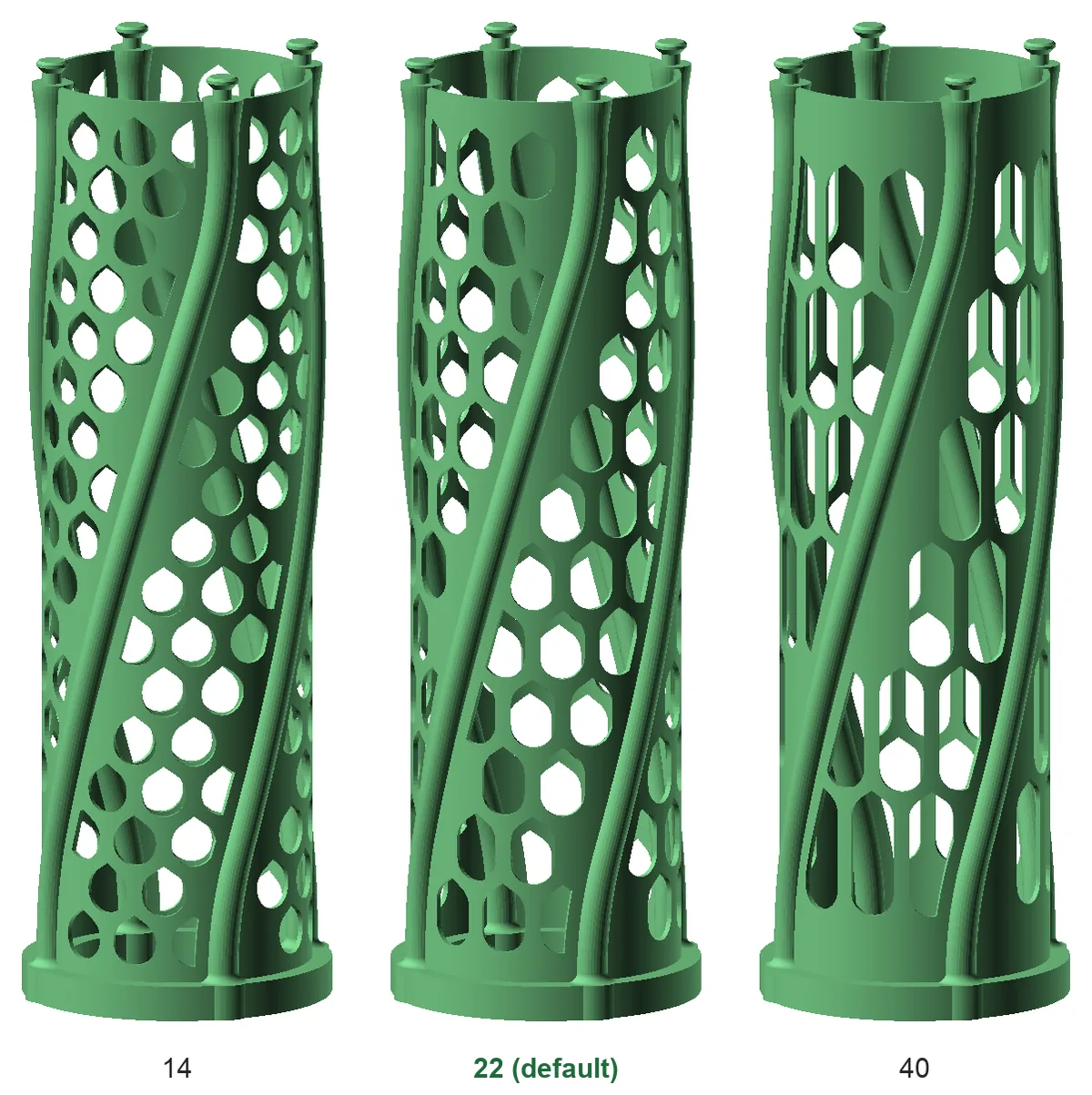
Cell height. How tall the cells are. Shown on the honeycomb.
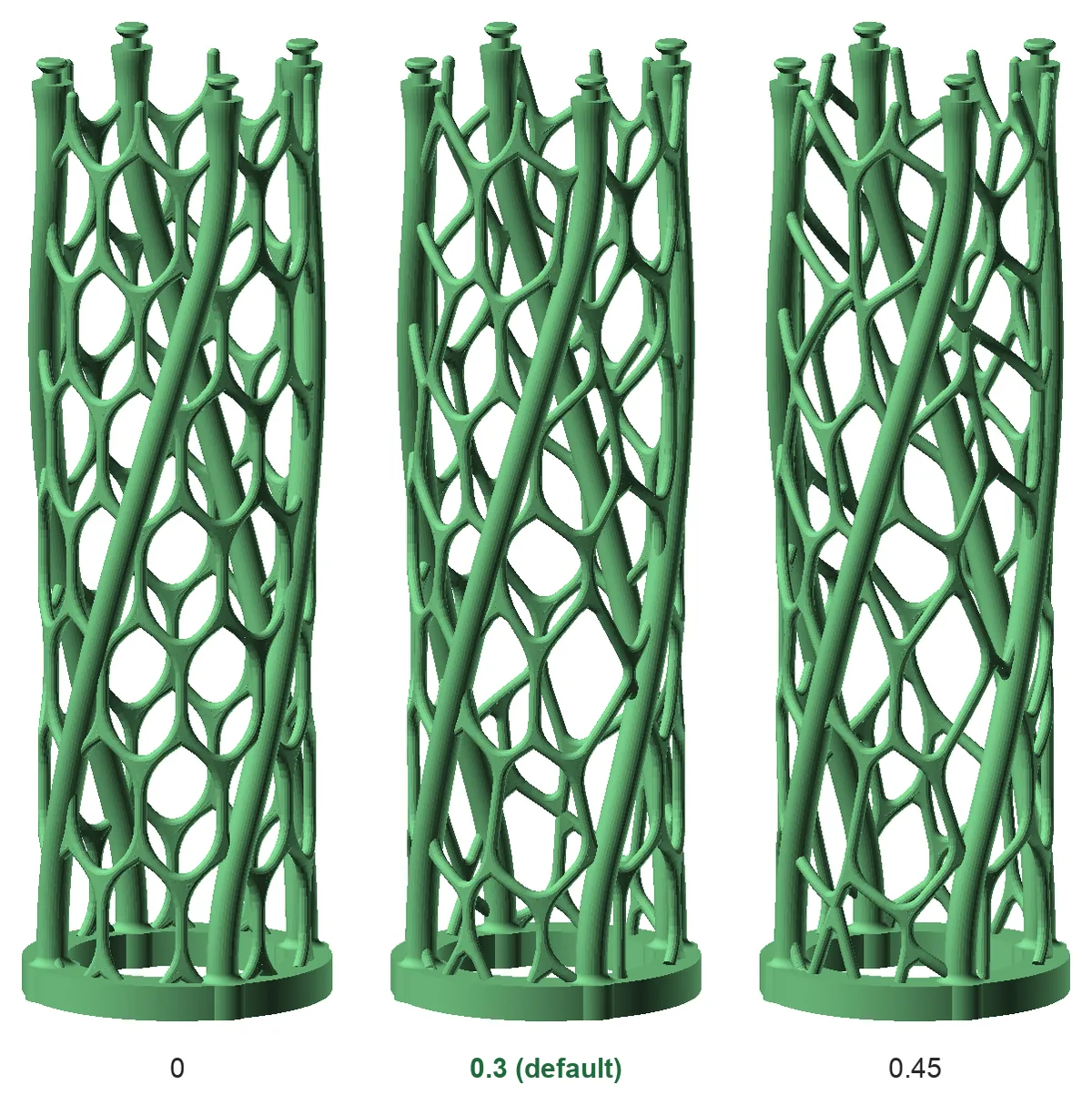
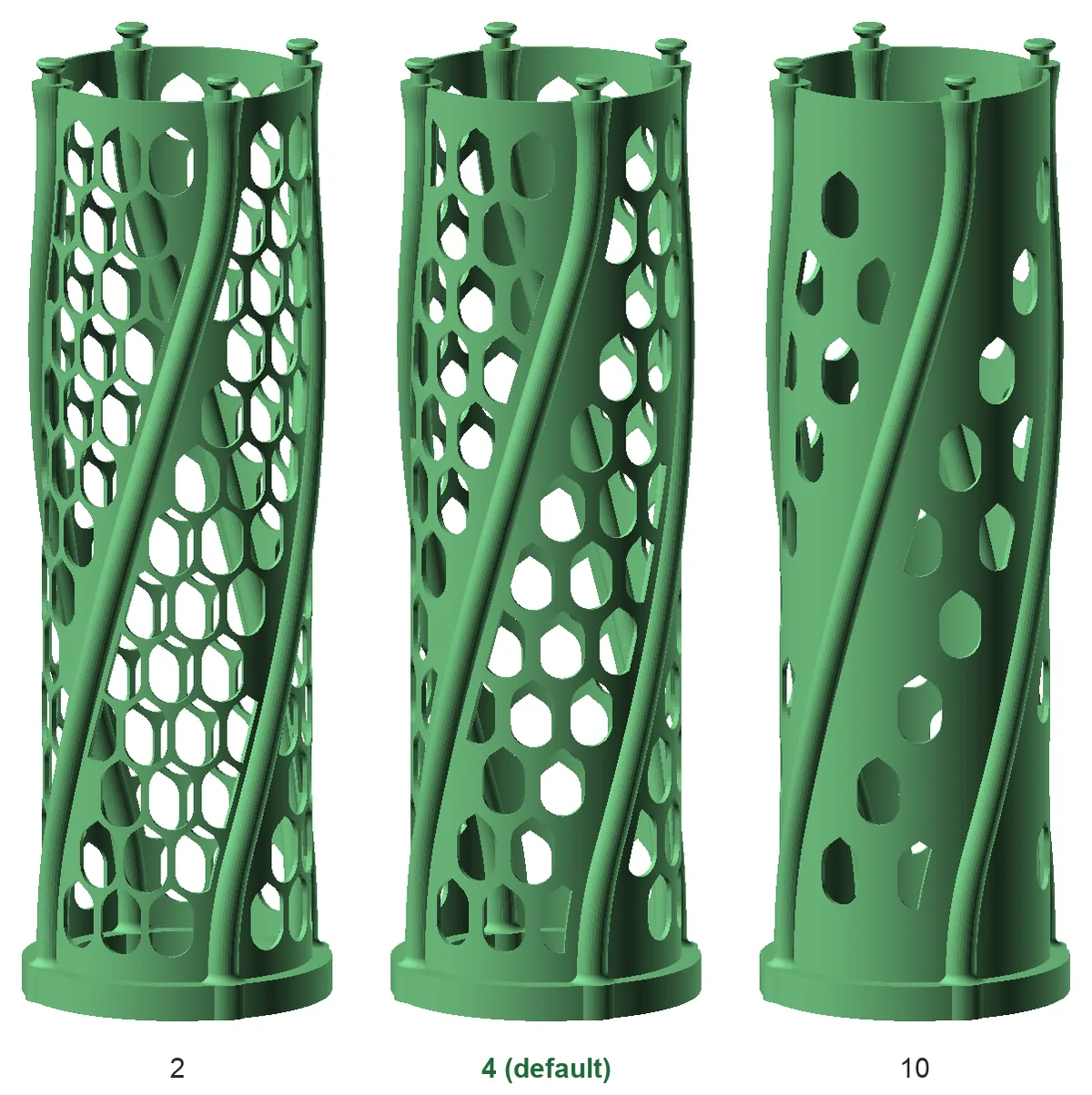
Irregularity. How far each cell's seed is scattered: 0 gives a honeycomb.
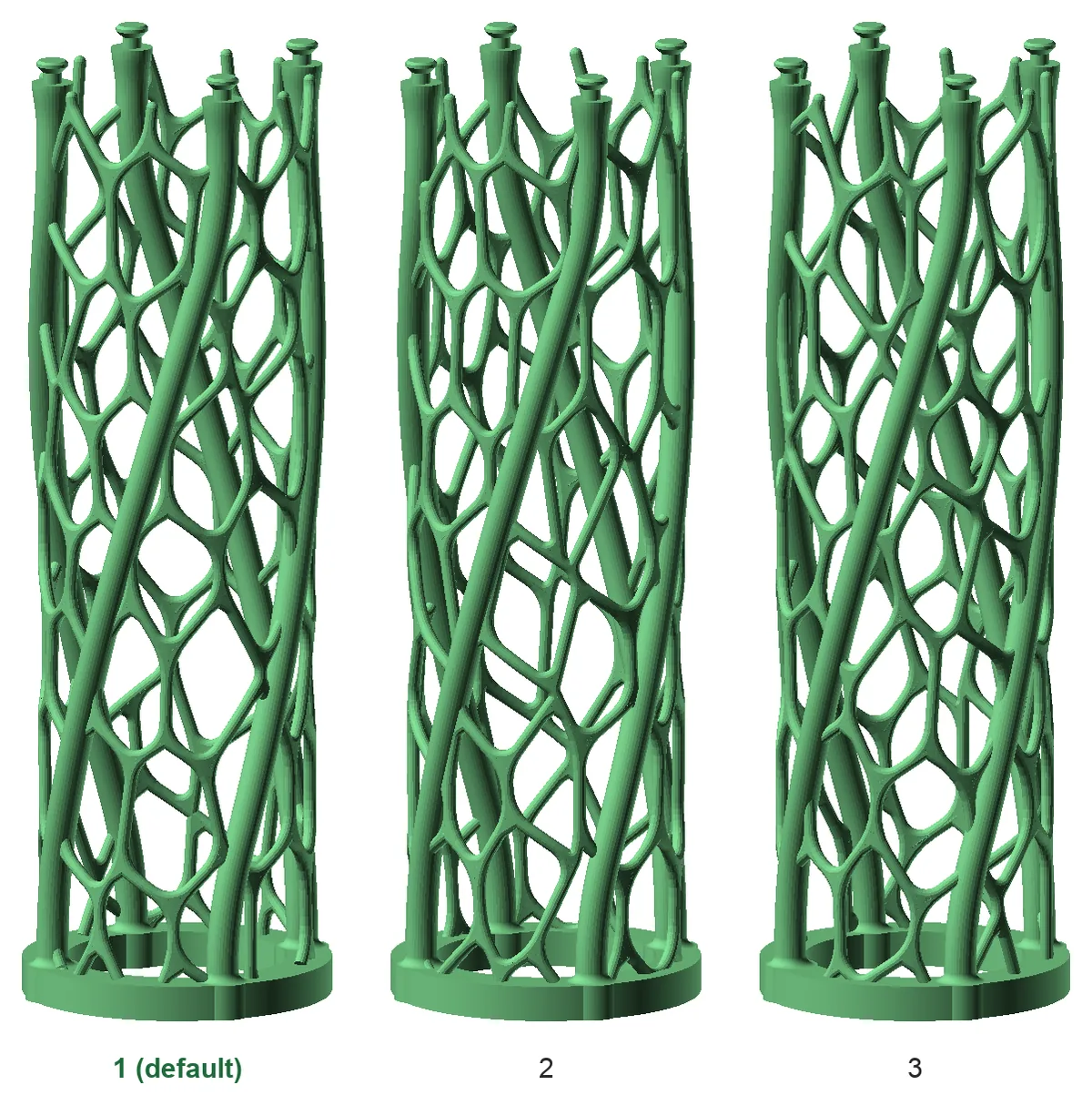
Pattern. Another number gives another random pattern of the same kind.
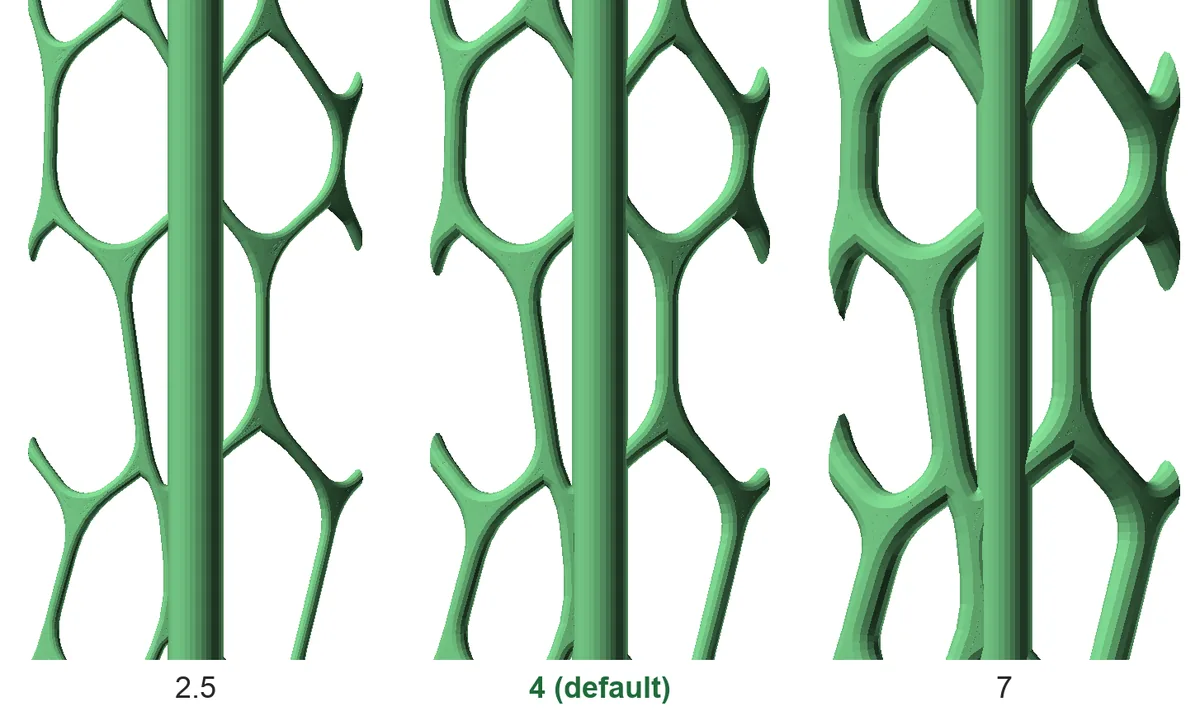
Rib. The thickness of the web's ribs, shown on the Voronoi web.
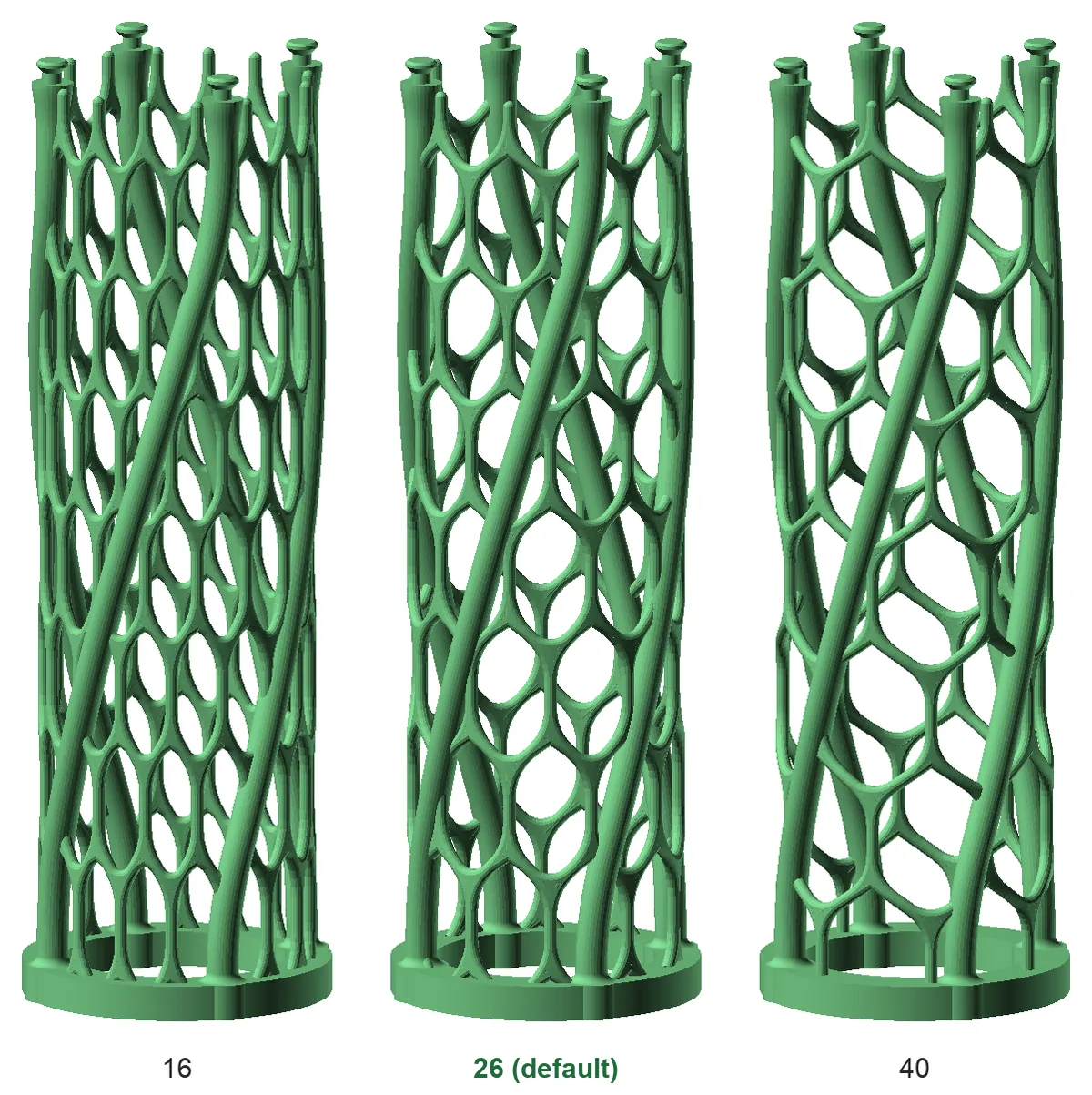
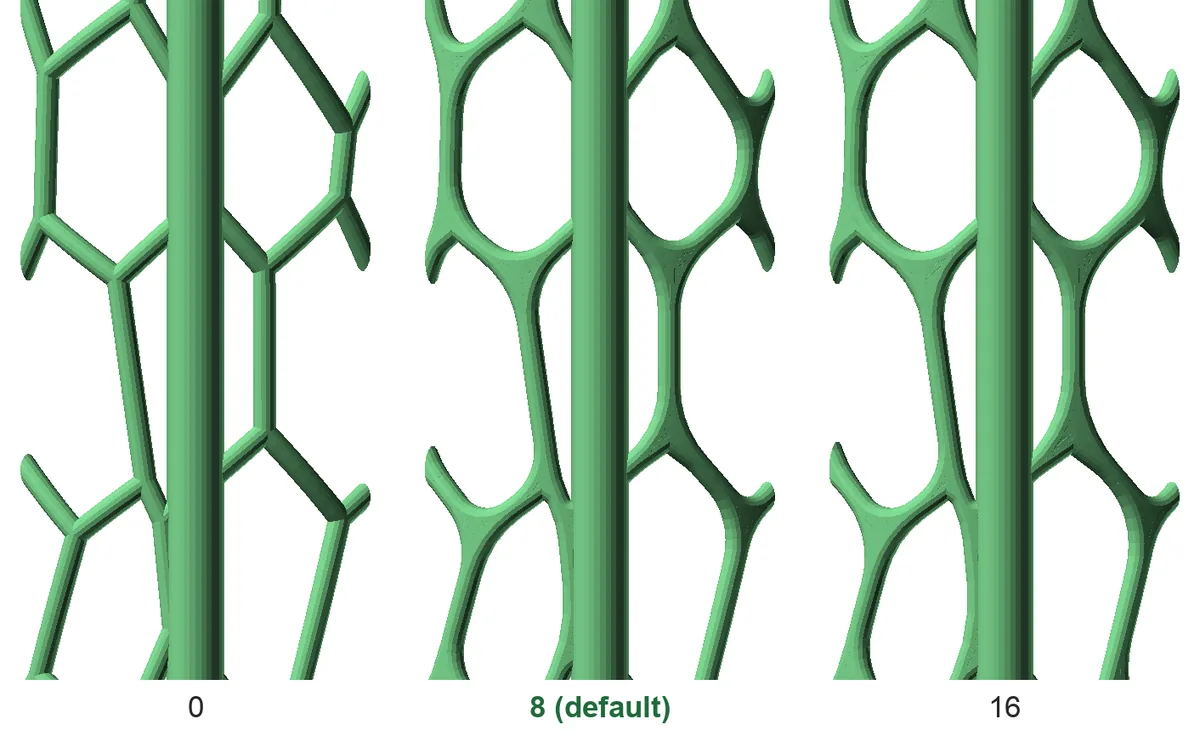
Fillet reach. How far along the ribs the corners of the cells are rounded.
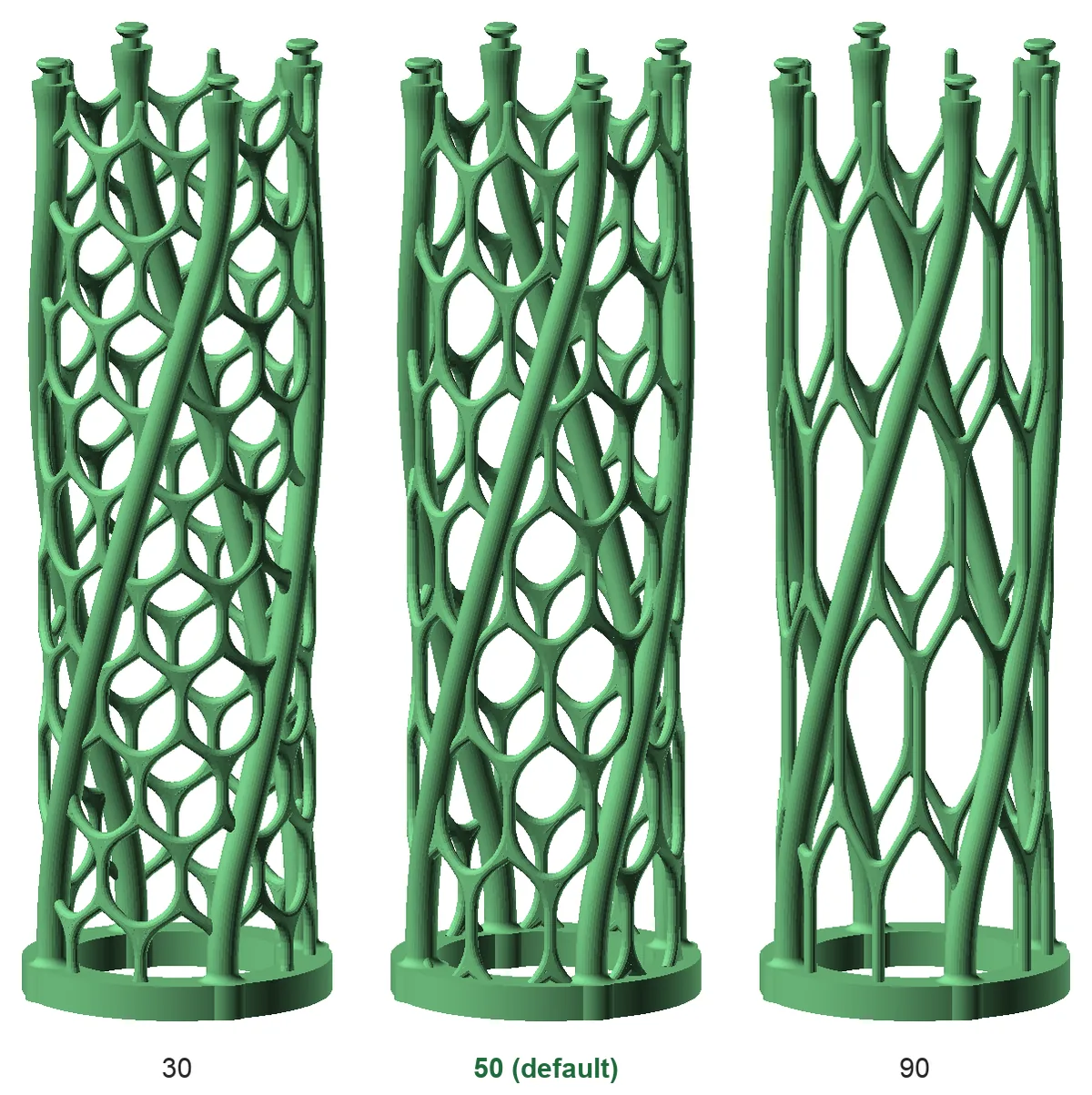
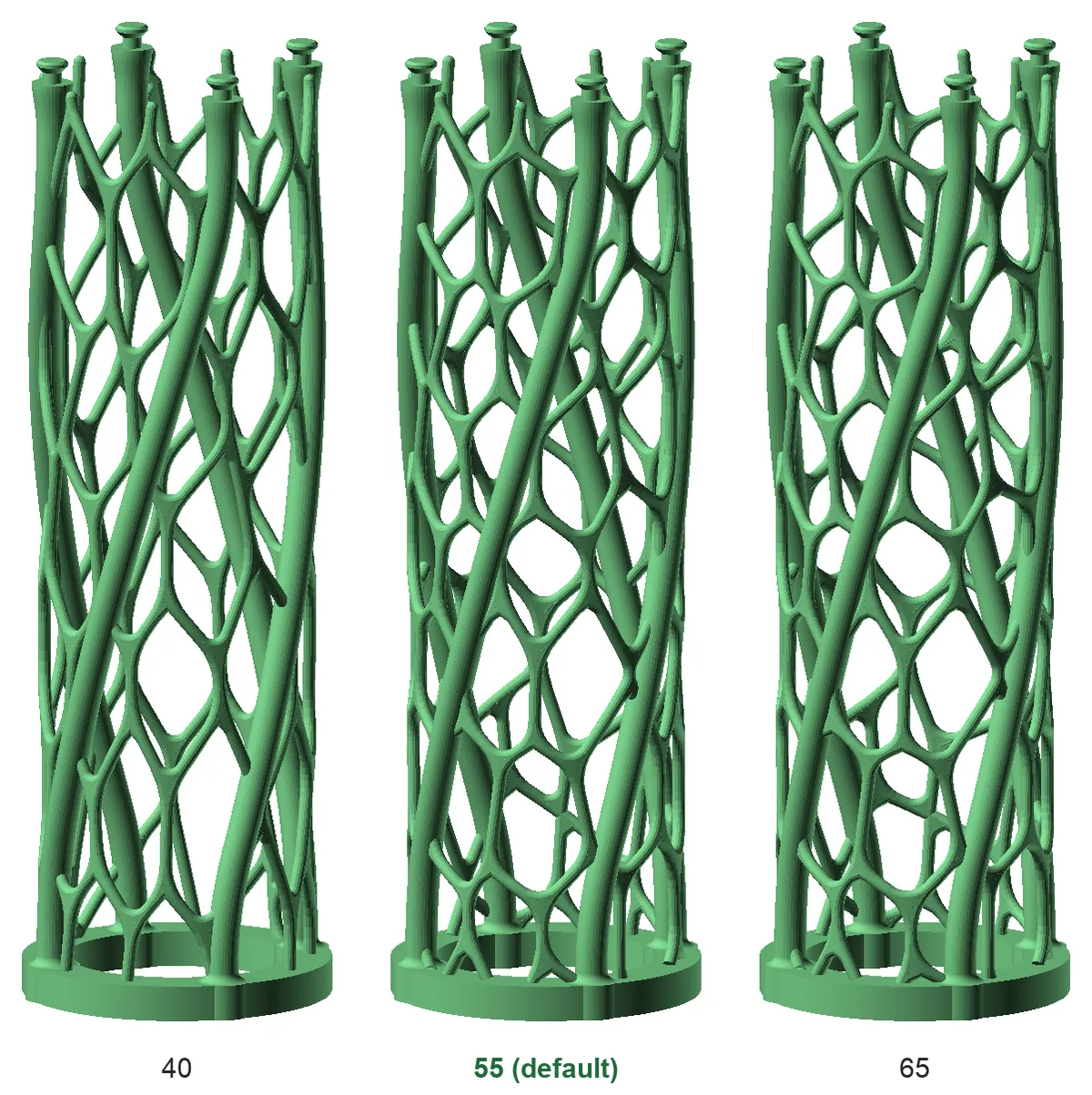
Web overhang. The flattest a rib may lean, from the vertical: lower values make steeper, taller cells that print without support.
Skin thickness. The skin's thickness, in a cut across the moss pole halfway up.
Hole width. How wide the holes in the skin are.
Hole height. How tall the holes in the skin are.
Hole land. The least skin left between two holes, and between a hole and a pole.
Spirals cw. How many spirals wind clockwise (seen from above), here with four the other way.
Spirals ccw. How many spirals wind anticlockwise (seen from above), here with four the other way.
Spiral angle. The spirals' slope from the vertical.
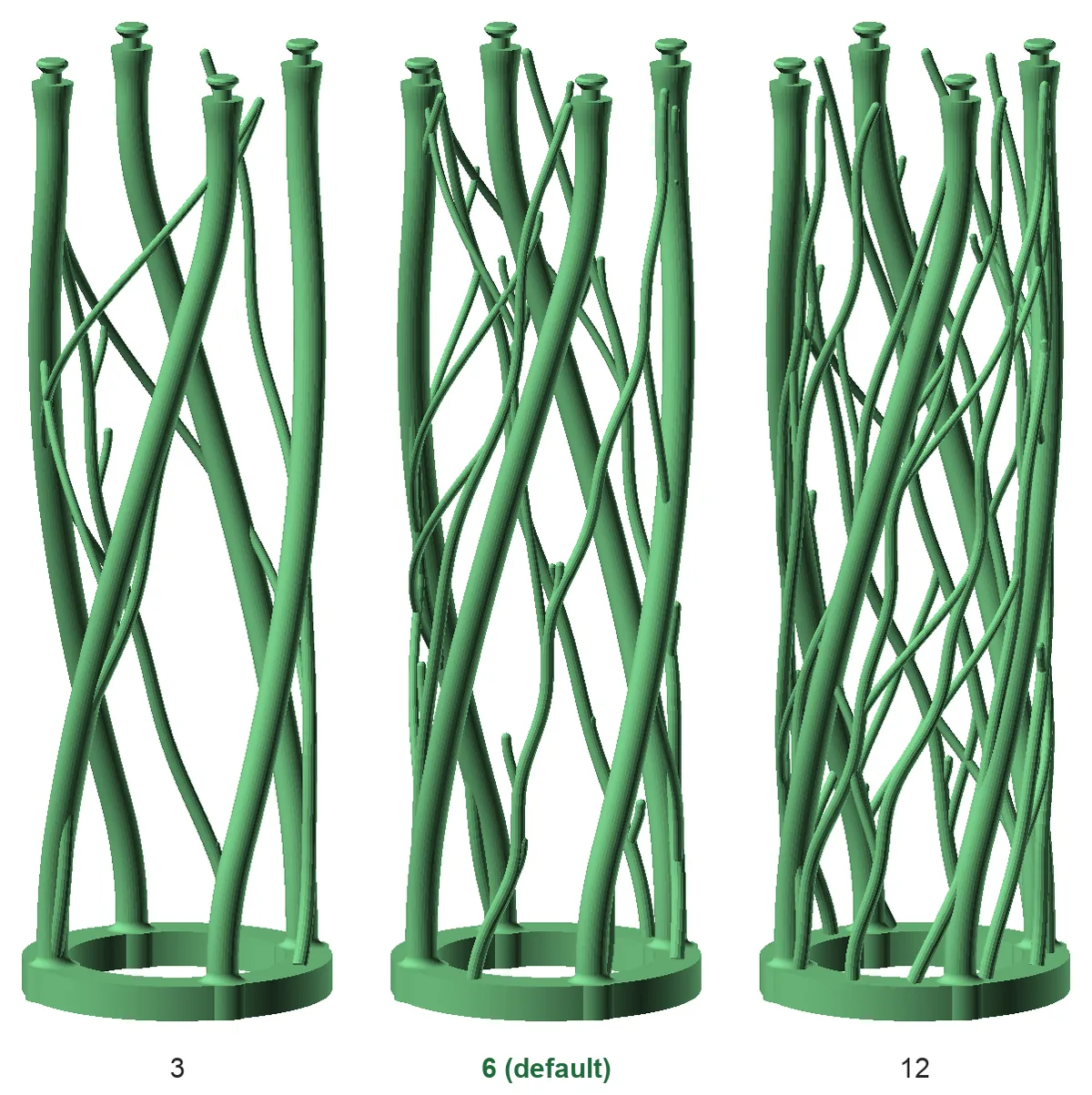
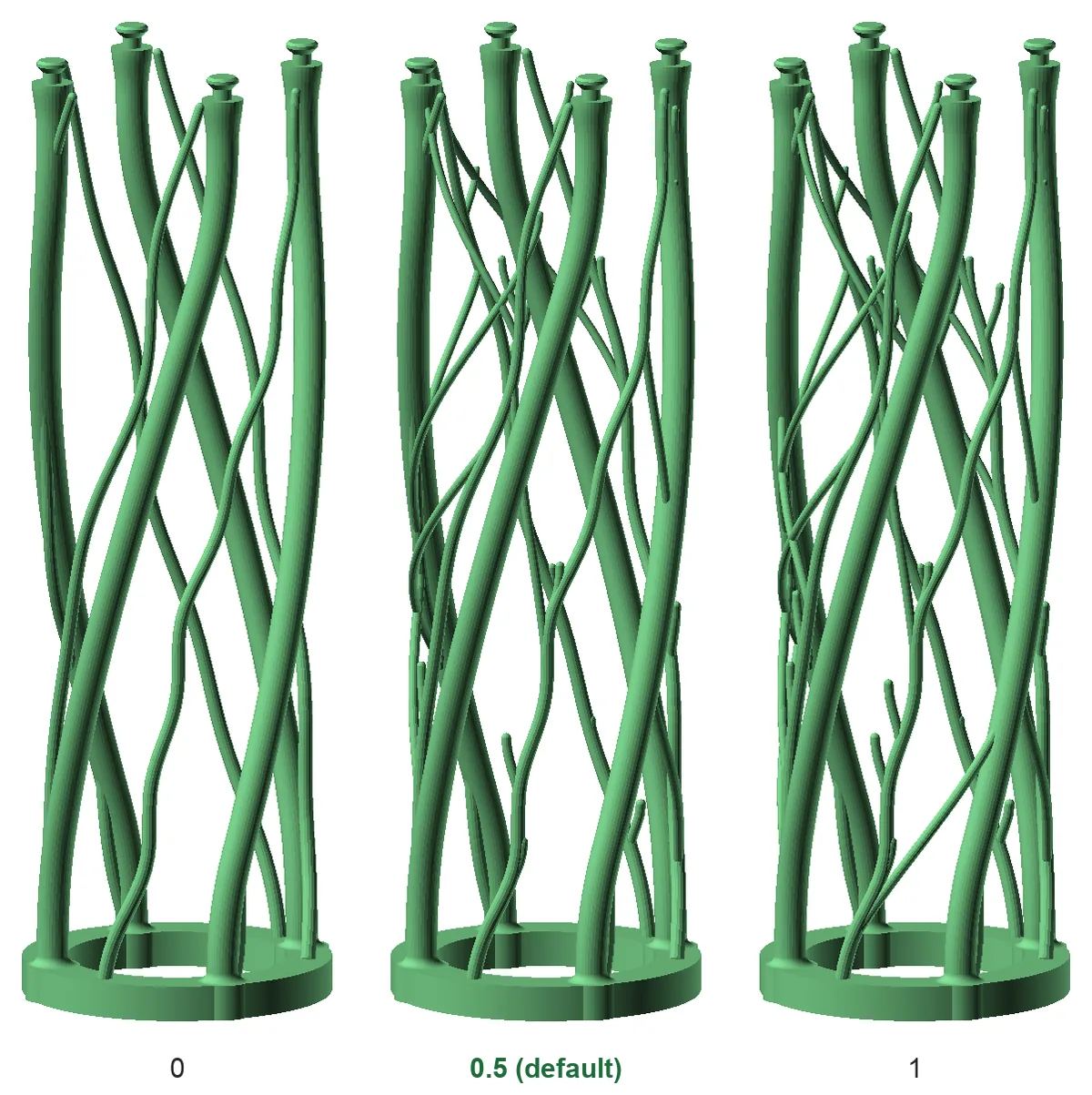
Vine count. How many vines climb from the ring.
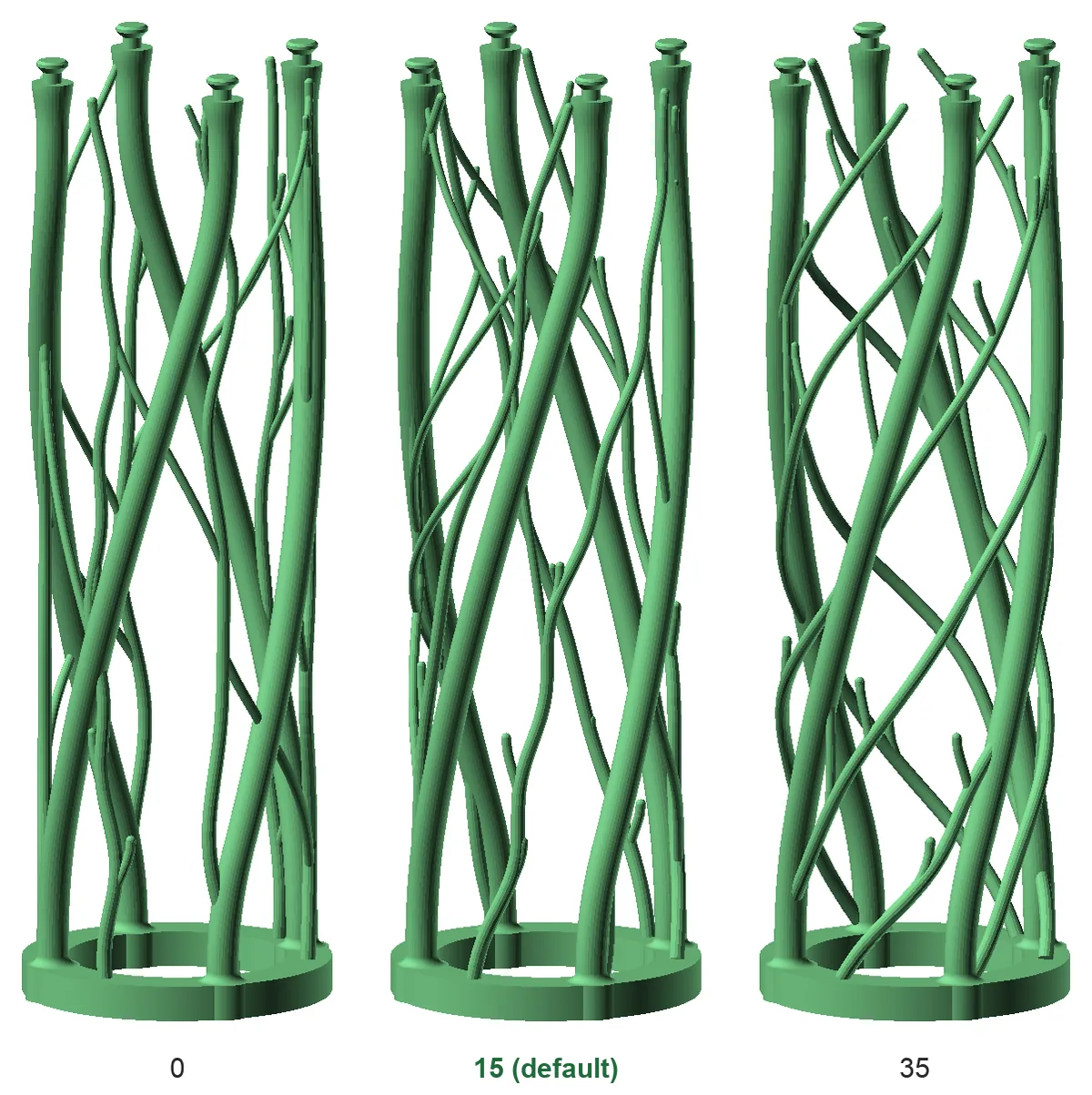
Vine lean. How far the vines lean from the vertical as they climb.
Vine wave. How far the vines meander sideways.
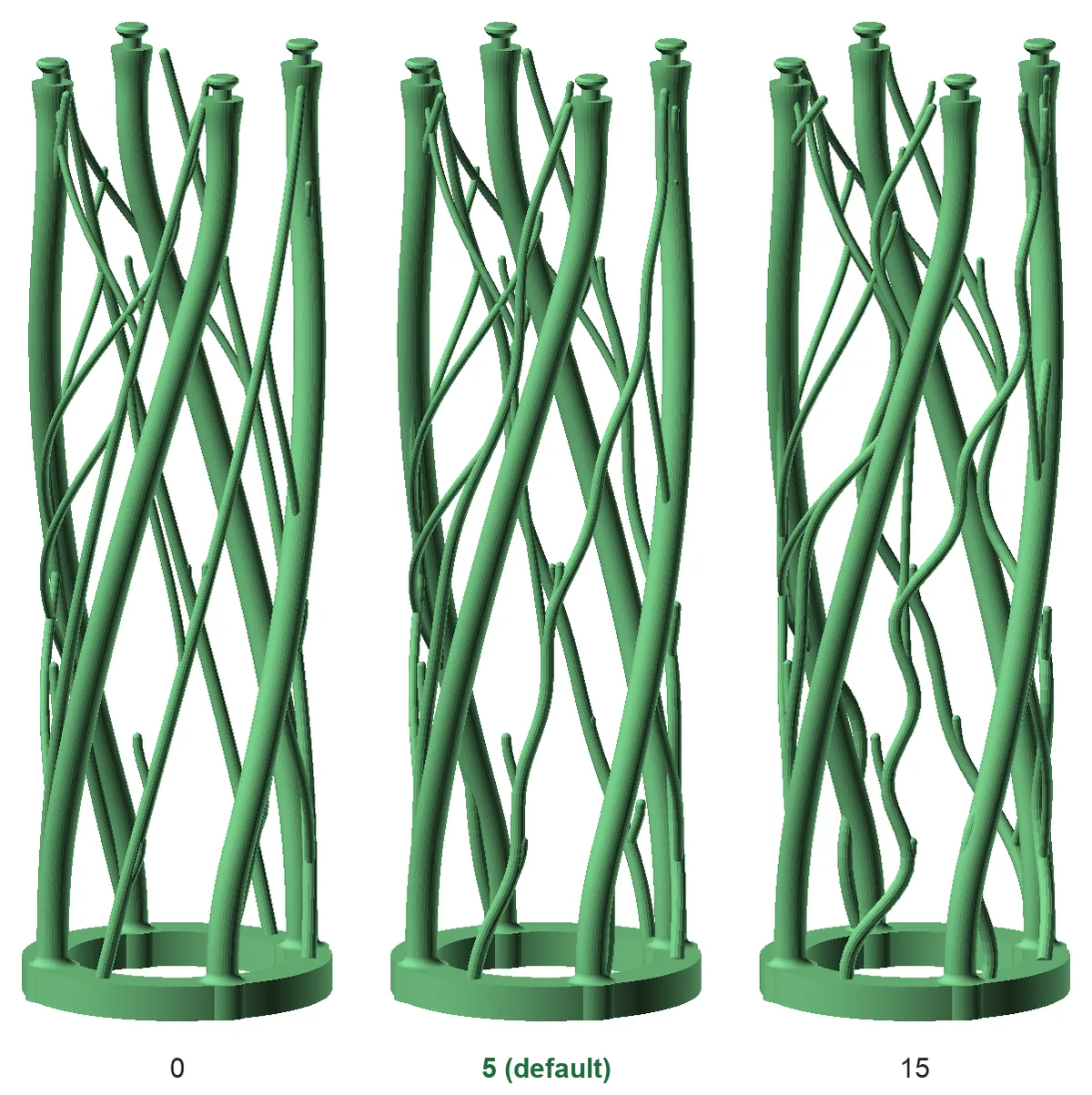
Branching. How often a vine branches, into the next vine or a tendril that curls upwards.
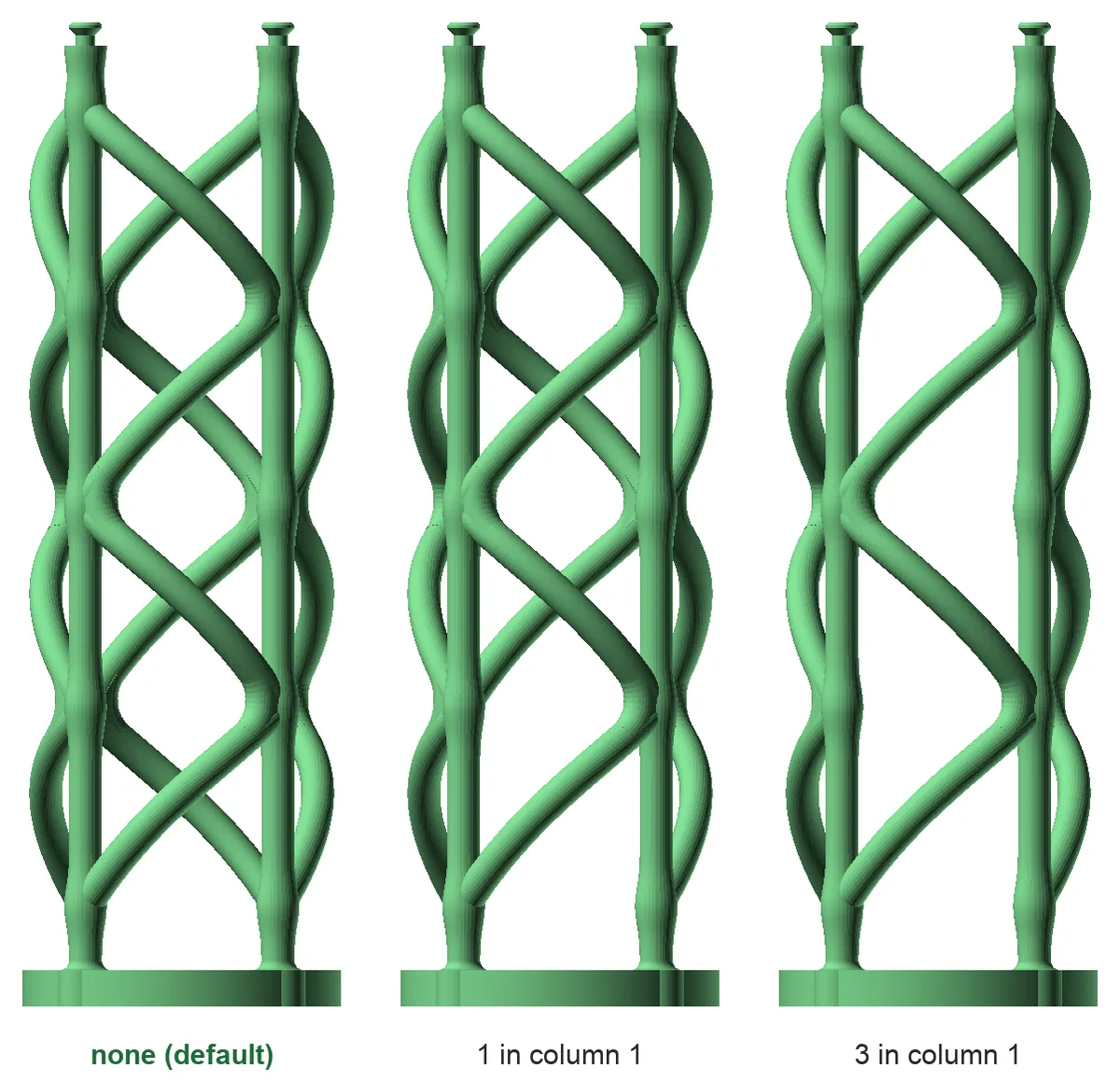
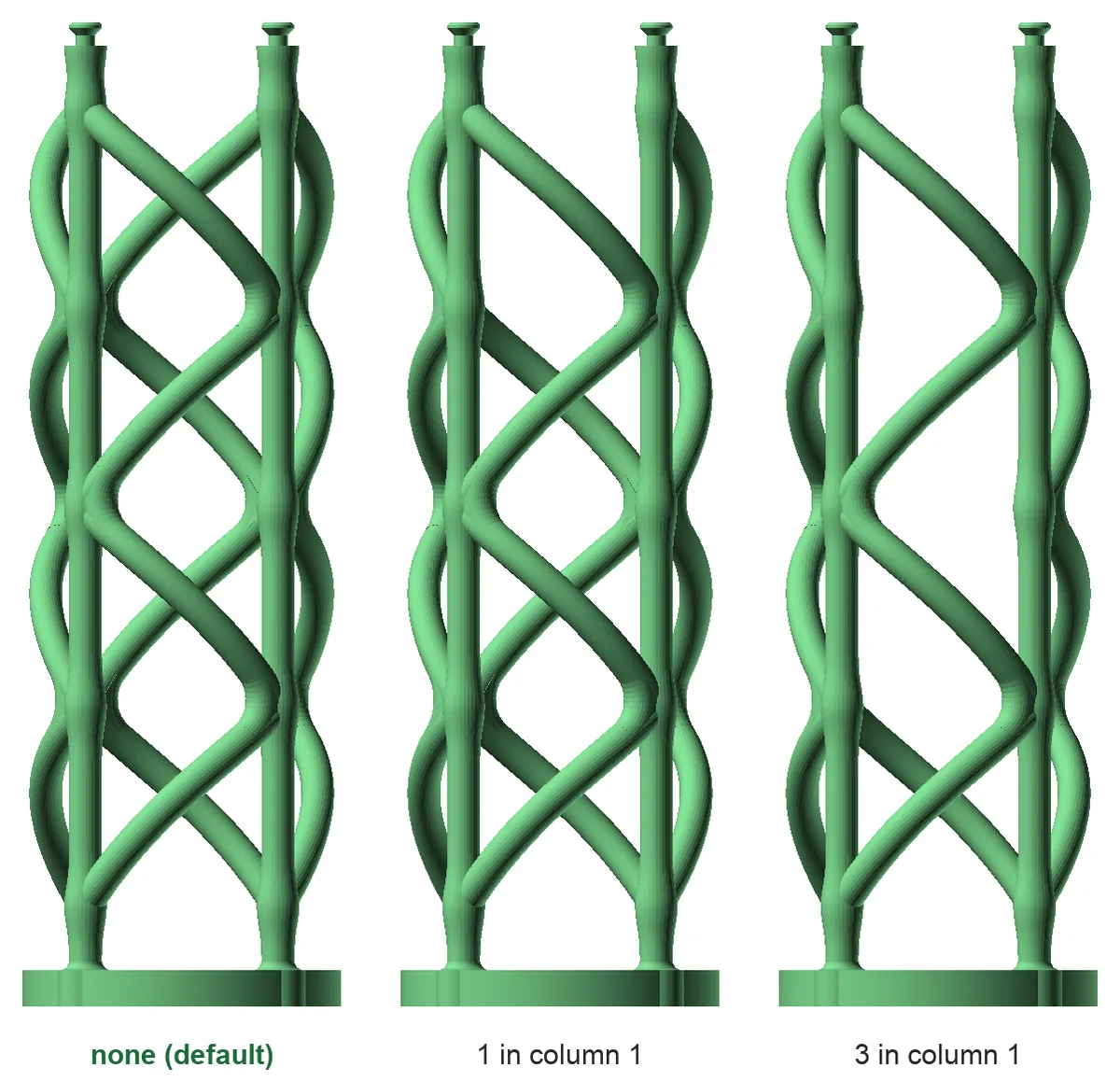
Omit bottom. Struts left out at the bottom of a column, here of column 1, for a pot's rim or a plant's stem.
Omit top. Struts left out at the top of a column, here of column 1.
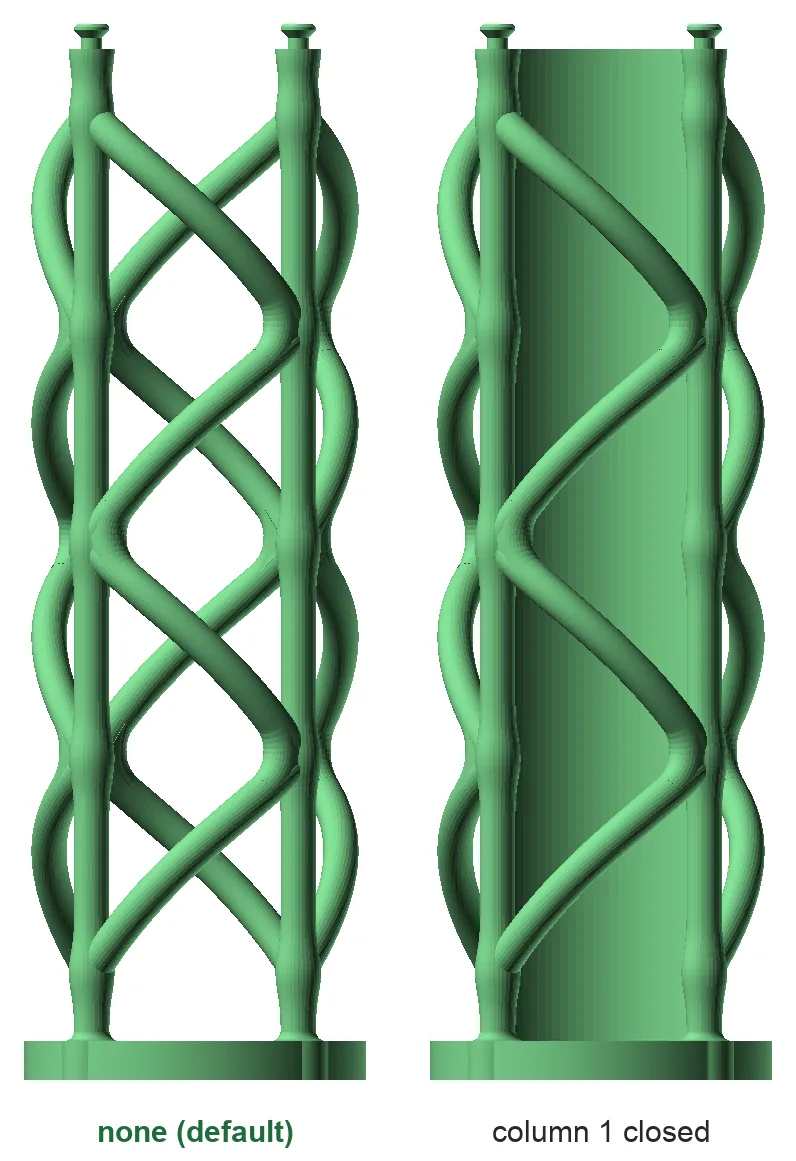
Close columns. A closed column gets a thin wall on the inside, to hold soil or moss; here column 1.
Column wall. The closed column's wall, in a cut across the moss pole halfway up.
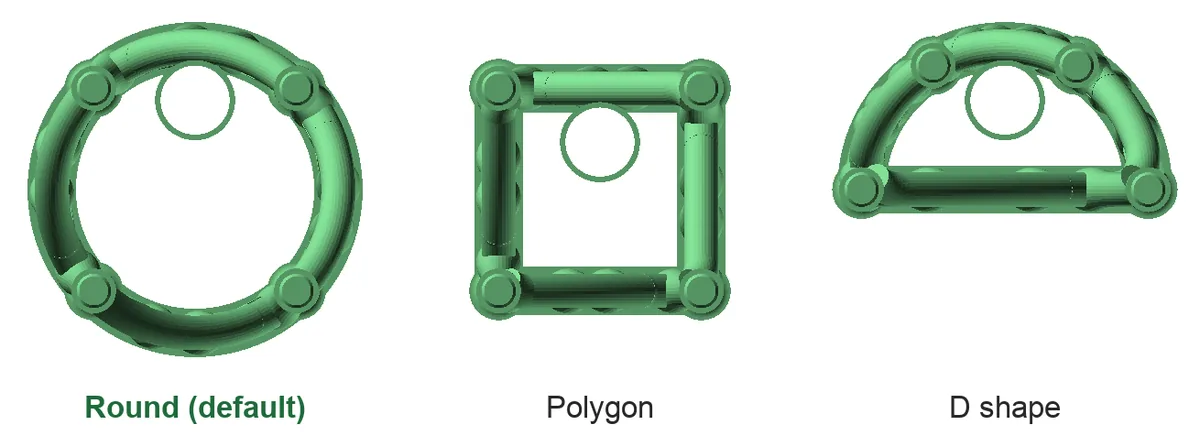
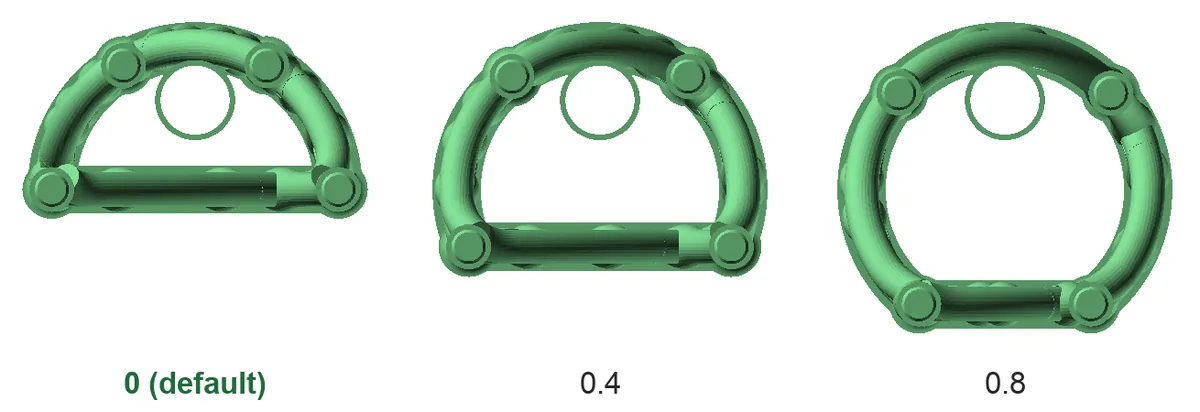
Ring shape. A round ring; a polygon with a corner at each pole; or a D, round but for one straight side. The web follows the ring.
Flat side. How far a D ring's straight side lies from the centre, as a share of the pole circle's radius: 0 is a half circle.
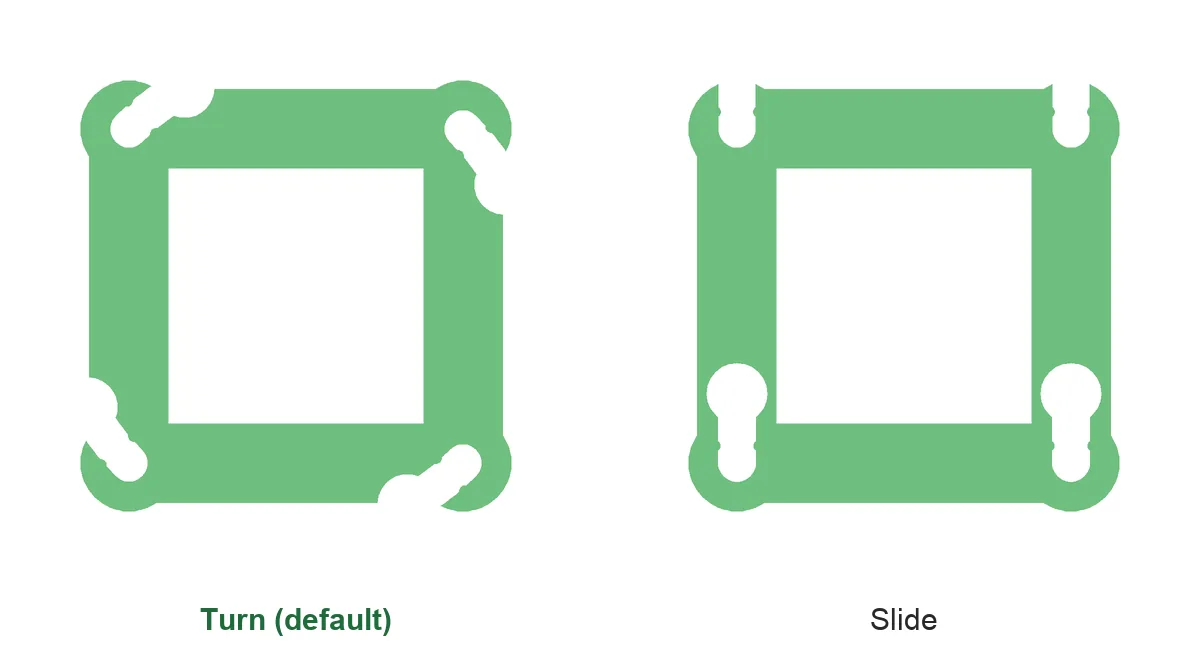
Bayonet. A polygon ring cut through its lip, seen from above: turned, the slots from the entry holes curve round the centre; slid, they all run straight the same way.
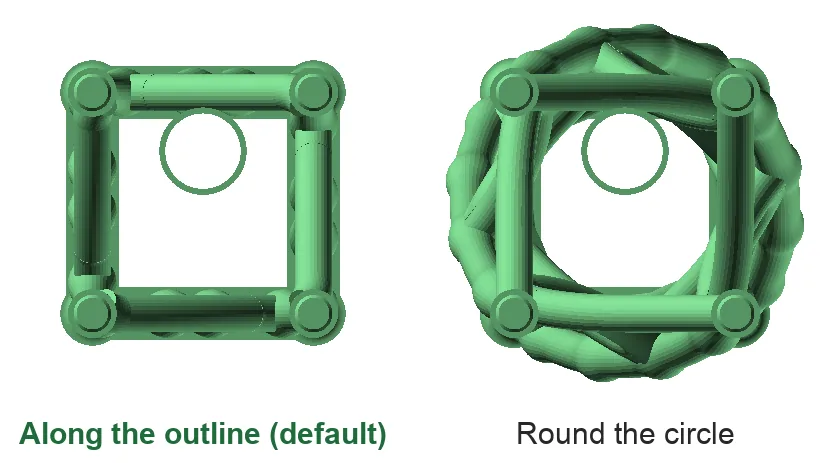
Polygon twist. Seen from above, a polygon ring's poles twist along its outline, inside the ring, or round the circle through its corners.
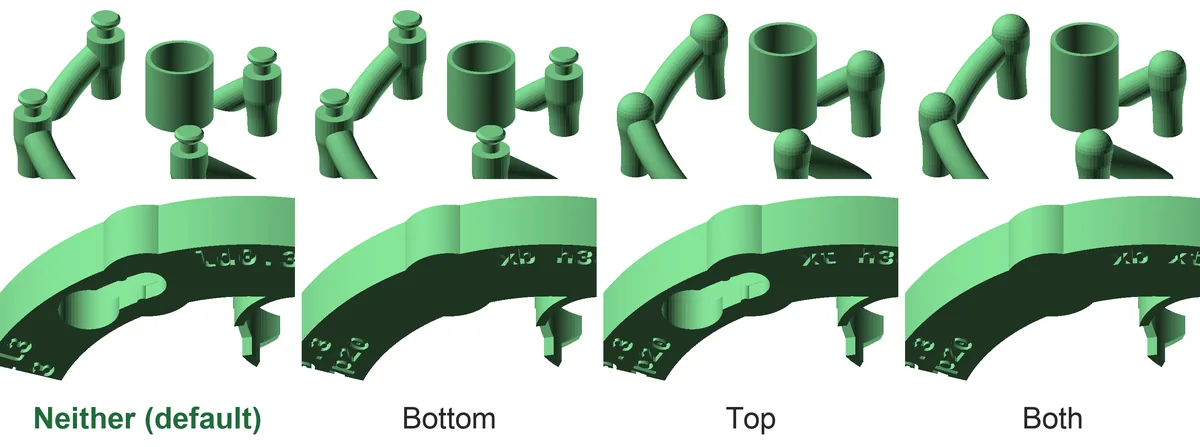
Bayonet off. Without the bayonet at the bottom the ring has no keyholes; without it at the top the poles end round instead of in heads.
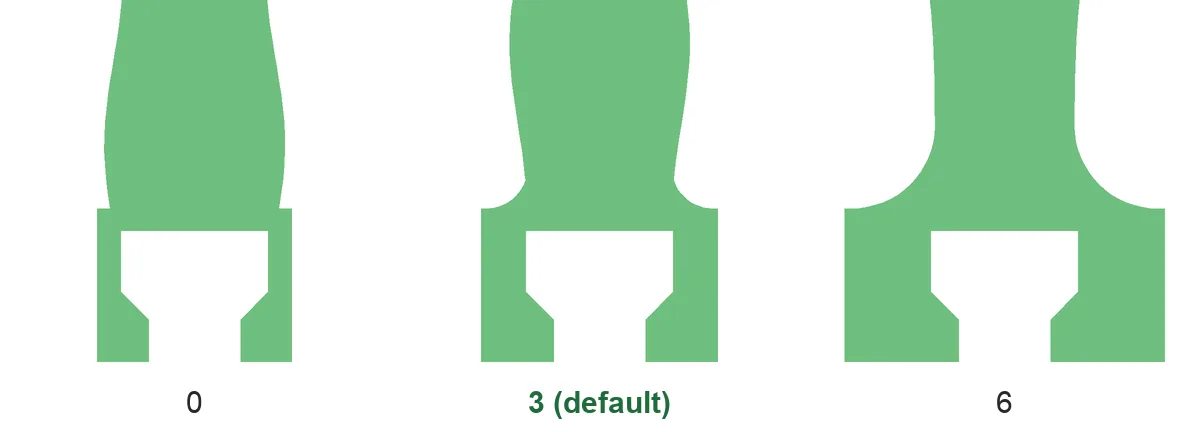
Ring fillet. The rounding where the poles meet the ring, in a cut through a pole.
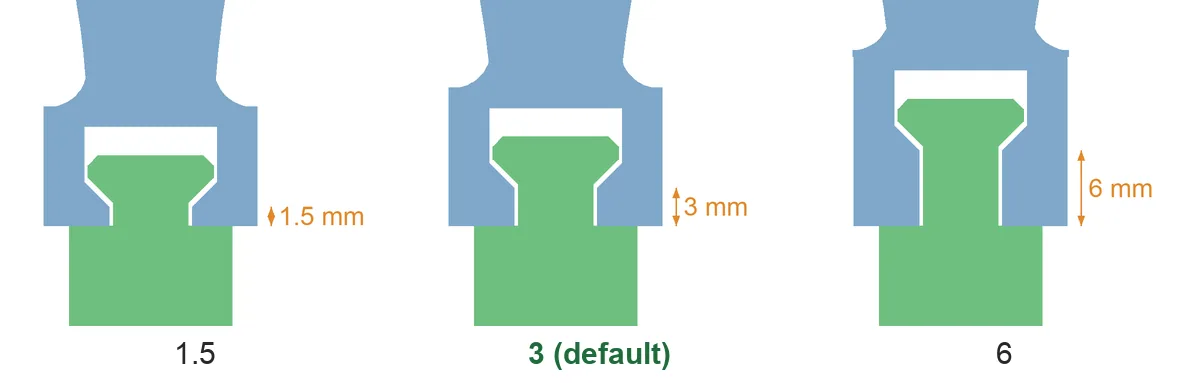
Lock lip. The ring's lip, held between the shoulders and the heads of the moss pole below (green), in a cut through a locked head. The heads' necks grow with it.
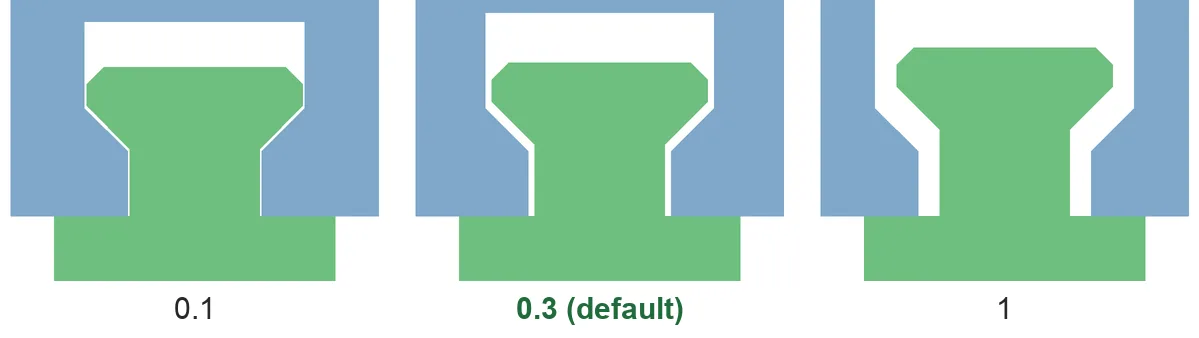
Lock clearance. The play around the necks and heads in the keyholes, in a cut through a locked head.
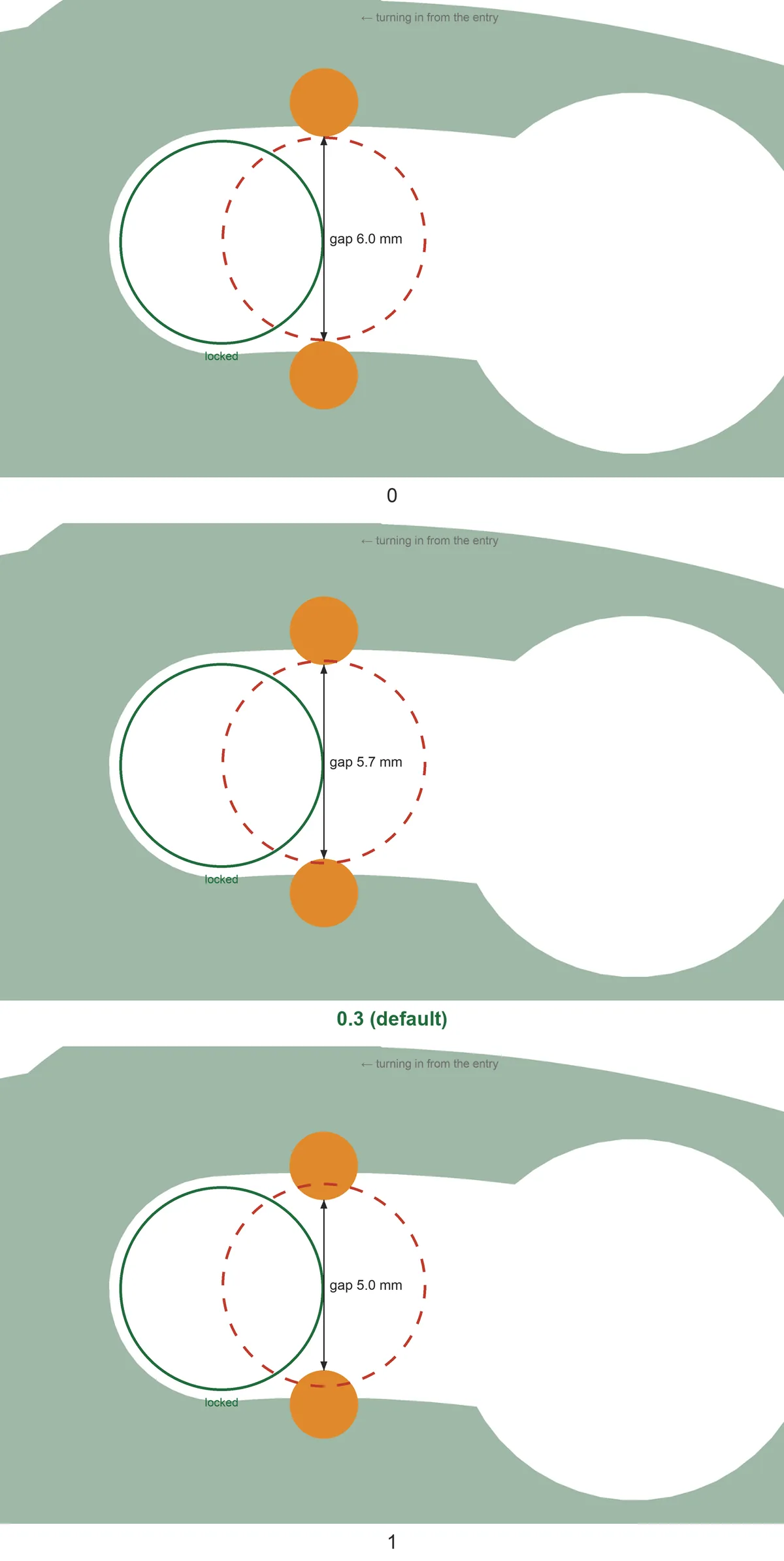
Lock detent. Two bumps (orange) narrow each slot just before the lock position, so the neck of the moss pole below (6 mm) squeezes past them and clicks into place. The gap is the neck's width less lock_detent: 0 only touches, 1 snaps firmly and turns hard. The ring cut through its lip, seen from above.
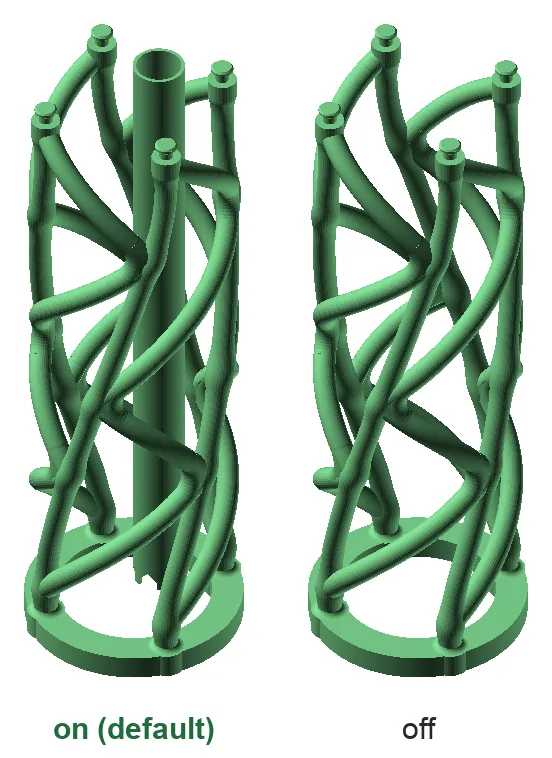
Watering pipe. The watering pipe stands inside one face, from the bed up to the shoulders, where it meets the pipe of the moss pole above.
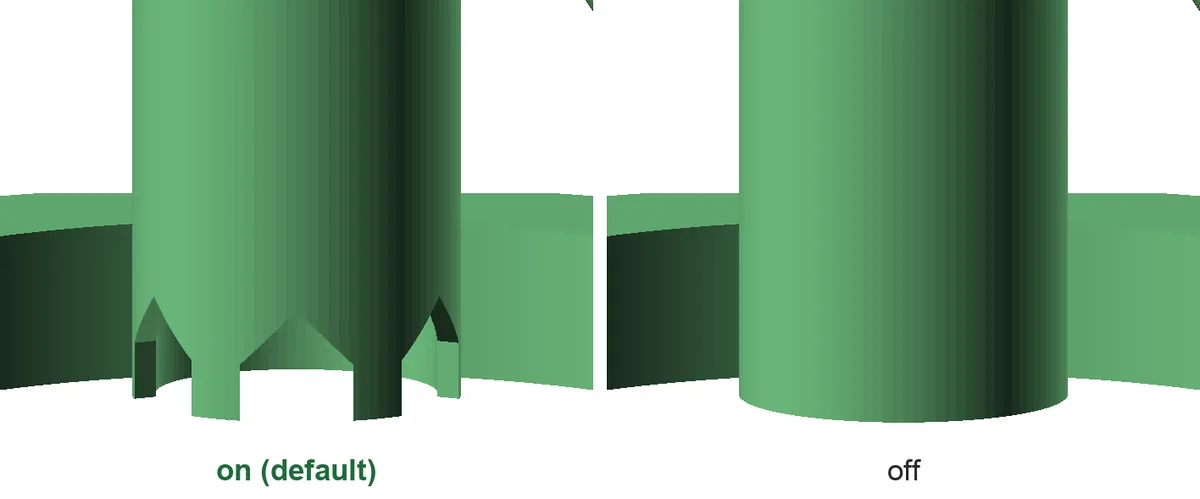
Pipe outlets. Openings at the foot of the pipe let the water out into the soil, seen from the centre.
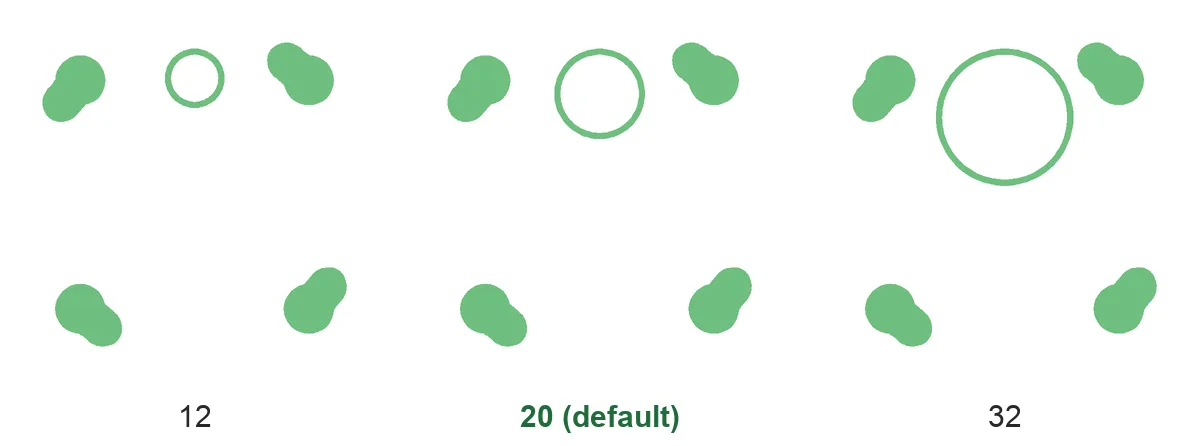
Water pipe. The pipe's inner diameter, in a cut across the moss pole halfway up.
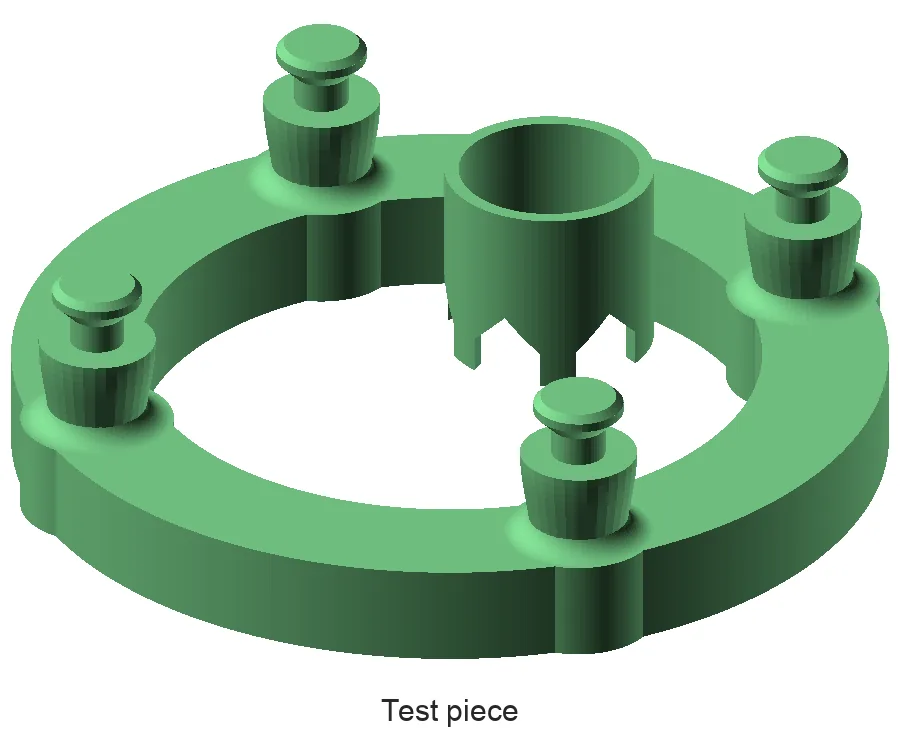
Test piece. A short piece with the ring, short poles and heads, to try the bayonet on your printer before printing whole moss poles: two of them lock together.
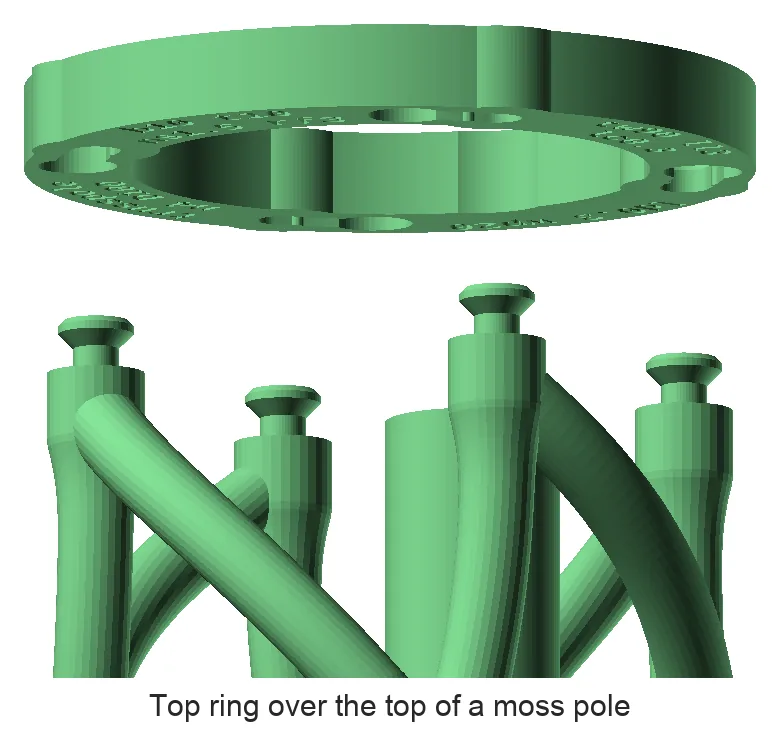
Top ring. The ring alone, with its keyholes, to lock onto the heads of the topmost moss pole and close it off; here lifted off the top of one.